

In Part 1 of this series on automation alignment, we described an overall approach to fitting the right type of automation to the type of work being
done. 
We discussed the high level of looking at the type of work being done and fitting Digital Business Automation (DBA) capabilities to that work.
Here in Part 2,
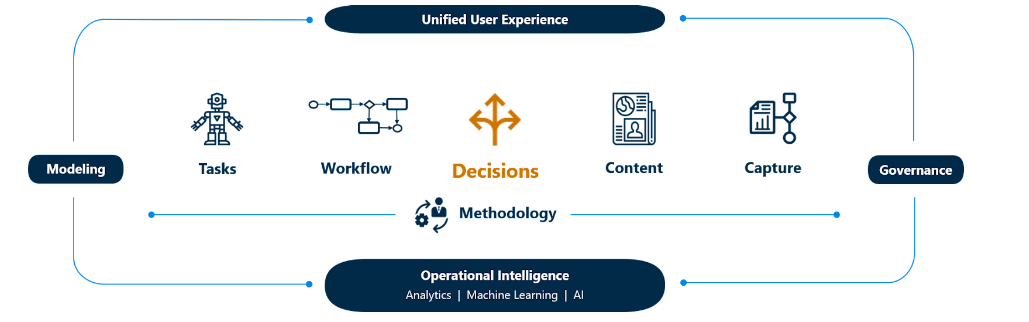
we’ll focus on the Decision portion of DBA, indicated in Figure 1 in orange. 

 Figure 1: Digital Business Automation capabilities with Decisions highlighted 
Decisions permeate our everyday lives. They are everywhere and happen minute by minute. Some of them are subconscious (taking the known
path to work), and some of them are highly conscious, such as deciding to seek out a new job. They also permeate the organizations 
where we work.
Every business has 
probably thousands of decisions made per day, with some of them being very opaque, others being driven by regulations, and
others just a part of the company’s culture. Whatever type they are, there is no question 
decisions are weaved into every thread of a business. The
question for us is, how can we best automate the
se decisions? 

The way we approach making automation decisions is by leveraging an Automation Alignment Matrix (AAM). The Automation Alignment Matrix 
allows us to 
analyze the type of work being done and map that to the type of automation recommended.  

Figure 2: Automation Alignment Matrix 
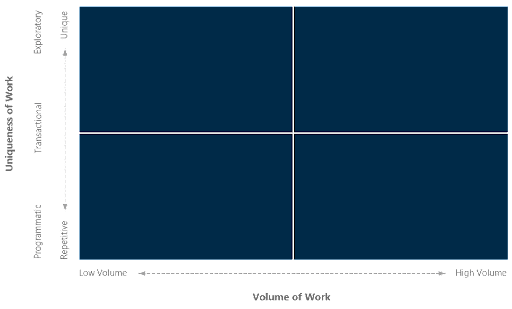
Along the Y-axis, we measure the Uniqueness of Work being done, while the Volume of Work is measured along the X-axis. What we are attempting
to do with this matrix is determine where an automation capability best fits into one of the four quadrants based on the type of work being done,
with the type of work determined by its uniqueness and volume. There are other factors an organization should 
take into account, such as assessing
the relationship between job performance and strategic value, which will help you determine the return on improved performance (ROIP). ROIP is
a subject unto its own, which we may cover in another blog. For a deeper dive into ROIP, read Part 1 -> Step 2 of 
Reinventing Jobs by Ravin Jesuthasan and John Boudreau 

Before we go too much further, some definitions seem appropriate. Low and High Volume (X-Axis), as well as Repetitive and Unique (Y-Axis), are
self-explanatory. However, the Programmatic, Transactional, and Exploratory terms along the X-Axis are less self-explanatory. The definitions for
Programmatic, Transactional, and Exploratory are from the MWD Advisor’s article mentioned earlier. These criteria were added to the X-Axis because
we felt they added more depth to the matrix. Below are definitions for the three words needing more explanation (somewhat appropriately, the
definitions for each of these get longer the less prescriptively the work can be defined up front):
 

  • Programmatic: Almost all the features of the work can be prescribed and designed in detail. It’s possible for the work to be almost entirely
    automated. 
     
  • Transactional: Many of the tasks and decisions involved, and most of the flow of work, can be prescribed and designed in advance. However,
    human discretion and expertise are required to carry out some tasks, as well as in deciding when, how
    , and where work needs to be progressed.  
  • Exploratory: The set and sequence of tasks and decisions needing to be performed, and the people or roles needing to perform them, are very
    unlikely to be decidable ahead of time. In exploratory work, the overall experience for both the work participants and the customer of the work
    is a set of possibilities being explored rather than a recipe being followed. 
     

We’ll look at Decision Automation in the context of all three types of work.  

Programmatic: 

For programmatic work (highly predictable)the consideration comes down to whether it is worth it to automate these decisions by encapsulating
the logic in rules, typically via a decision management engine.
 Also, companies can consider whether the thousands of rules they have buried in code 
should be externalized. These rules are what end up making many decisions for the company. However, they are not easy to get to or change, nor is
the logic transparent to the business users. 
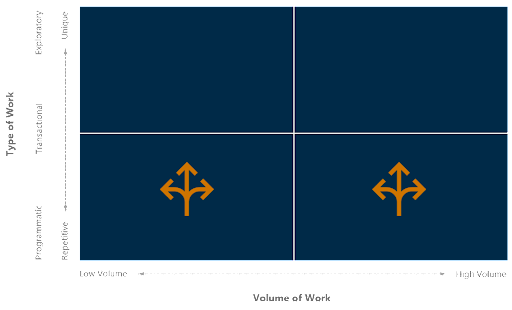
 For programmatic work, much of the decision of whether to leverage Decision Management to automate
the rules
comes down to whether transparency, reuse, and ease of understanding are important for that set of rules. If any of these are true, then
Decision Management becomes a good choice for automating rules 
for programmatic and repetitive work, regardless of whether the work is low or
high volume. 
 

Figure 3: Decision Automation for Programmatic Work
Transactional: 

For Transactional work, because many of the tasks and decisions involved can be prescribed and designed in advance, much of the way decisions can
be automated here mirrors what we 
defined for programmatic work. However, because transactional work requires human discretion to carry out some
tasks,
as well as deciding when, how and where work needs to progress, there is a wrinkle to the way Decision Automation should be applied to 
Transactional work. 
For the highly predictable decisions, the standard approach of using prescribed business rules with predefined results is the best fit.
However, there are many situations in transactional work where things aren’t so predictable. 
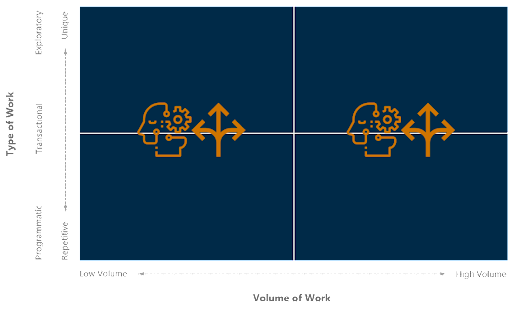
In these cases, guided decisions are more appropriate than
prescriptive decisions. This allows the human to get advice based on 
predictive statistical models; this will help the human to take the next best step.  

An example of this type of transactional work is a sales process where there are certain steps and rules which are always followed. However, there may
be certain points in the sales process where based on 
the current prospect data combined with historical data of other customers, the predictive engine
could recommend 
a few alternate actions which have produced the desired outcome (a sale, or even faster deal progression) in the past. Figure 3 indicates
D
ecisions are relevant in the Transactional part of the matrix for both low and high volume work. 

Figure 3: Decision Automation for Transactional Work
Exploratory: 

Exploratory work is, by definition, unpredictable. The very word explore brings to mind going off and doing exciting and unforeseeable things. Every company
has a ton of exploratory work
. This work is typically the highest value work done at a company. This area houses your knowledge workers, and we predict this
is where automation will 
eventually drive all human workers to live. Applying prescribed automation to exploratory work becomes much more difficult than
the other types of work
, if not impossible. Think about the work your executive teams typically do. Mostly, it is making decisions and delegating work based on 
their experience and knowledge of the business. Trying to predict those decisions and actions through prescribed rules and workflows would be a recipe for disaster. 
Thus, prescriptive rules do not play much of a part here. However, guided decisions via AI engines suggesting next best actions are highly relevant here. If your
organization has a lot of historical data relevant to the exploratory area decisions are being made in, it would make sense to mine that data to determine what
decisions produced the 
most desired outcomes for your organization. From this, models could be created, which would augment knowledge workers to help
them make the best decisions. 
A great example of this is the way Ray Dalio described how his business ran in Principles: Life and Work. No decisions were made
without data, and because of this
, their decisions kept getting better and better.  

Figure 4: Decision Automation for Exploratory Work
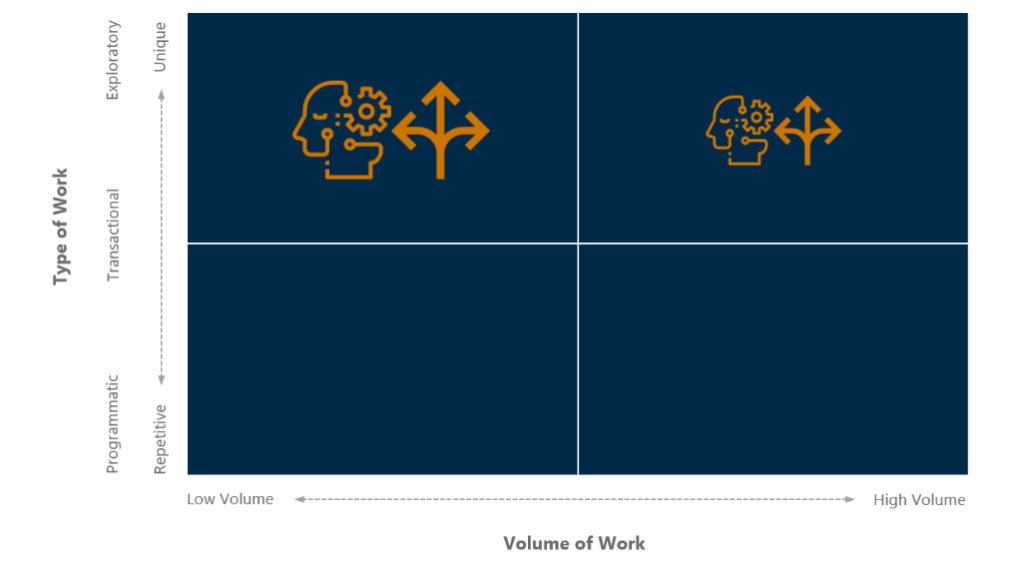
You may notice that the High Volume / Unique / Exploratory quadrant has an AI / Decisions icon which is smaller than the Low Volume / Unique / Exploratory quadrant.
That is due to the nature of exploratory / unique work. There just isn’t a lot of
 work that is highly exploratory in nature and also high volume. 

You now have a highlevel approach to what type of work fits bests with what type of Decision Automation. In future blogs, we’ll cover Tasks, Workflow, Content, and
Data Capture, although not necessarily in that order.

 

What is the Automation Alignment Matrix?

How to Avoid an Automation Tower of Babel


This is the first in a series of blogs describing an approach to aligning types of work with the proper automation capabilities within Digital Business Automation.

In the Bible’s Tower of Babel story, a group of people decided to build a tower to heaven. They were doing great until God realized they were going to succeed and decided he/she doesn’t want them making it to heaven without going through the proper channels. So, God decided to make them speak different languages. At this point, the construction of the tower grinds to a halt, and the people scatter to the corners of the earth. I’ve highly paraphrased the story, and maybe even taken some liberties, but you hopefully get the point. I’ve always thought the story was fundamentally about the incredible heights a group of people can reach if they speak the same language (culture) and have the same goal. And alternatively, what can happen if they start speaking a different language (culture) and their goals aren’t aligned. There are enough studies about companies who have a shared culture and set of goals that we know how incredibly important this is to success.

Figure 1. Szkieletor in Poland. Construction started in 1975 and has not finished yet


So what does this have to do with Automation? What every organization wants to achieve with automation is a much more productive and competitive workforce, with the hope their organization will gain an insurmountable advantage over the competition. As IBM states in their whitepaper Reinventing business with automation “Ultimately, the goal of digital automation is to move everyone in the organization closer to the expert level by giving them enhanced capabilities and empowering them to use those capabilities more effectively.” By giving users enhanced capabilities and freeing them from the highly repetitive and mundane, they are freed up for higher level thinking and possibly becoming indispensable experts, which gives them and their organization the possibility of being great. In our opinion, all greatness starts with expertise. To gain your insurmountable advantage, your organization has to put your employees in position to be experts. Automation can help with this. 

However, you cannot get your employees there if you are all speaking different languages. You’ll end up with your own automation Tower of Babel. We covered how you can create a Digital Business Automation Organization (Program or Center of Excellence is another way to put it) in a separate blog. Organizational alignment is integral to establishing culture, or speaking the same language. Another essential part of the formula to make sure you are speaking the same language is to have a documented framework that allows you to analyze the type of work being performed, and match it with the type of automation which is the best fit for that work. There are some excellent write-ups on this, with one of the best coming from Neil Ward Dutton, formerly of MWD Advisors and now working at IDC. Unfortunately, the MWD Advisors website is no longer operational so you cannot download the article. However, there are a few other adaptations out there to give you an idea of Neil’s approach (recording of presentation at BPMNext,  podcast at bpm.com, and SlideShare). 

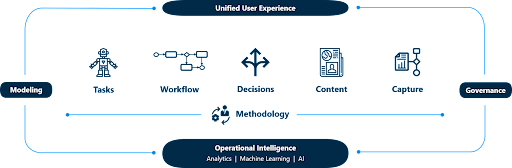
While Neil’s approach is extensive and truly vendor agnostic, we wanted something a bit more narrow, and specifically created for the areas of automation covered by Digital Business Automation (DBA). DBA  focuses on the automation areas of Tasks, Workflow, Decisions, Content, and Capture, with all components being augmented and extended by AI. Since we are an IBM partner, this is what we advise on most of the time, and thus the language we need to be able to speak with our clients. 

Figure 2: Components of Digital Business Automation

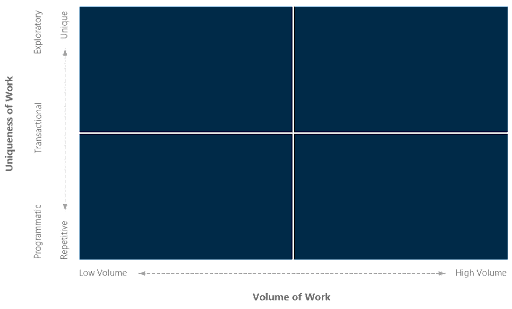
What we came up with is what we call our Automation Alignment Matrix. It is a hybrid of the approach from MWD Advisors and IBM’s Reinventing Business With Automation whitepaper. We wanted a matrix which was much more prescriptive than IBM’s depiction, but less encompassing than the MWD Advisor approach.

Figure 3: Automation Alignment Matrix

Along the Yaxis, we measure the Uniqueness of Work being done, while the Volume of Work is measured along the Xaxis. What we are attempting to do with this matrix is determine where an automation capability best fits into one of the four quadrants based on the type of work being done, with the type of work determined by its uniqueness and volume. There are other factors an organization should take into account, such as assessing the relationship between job performance and strategic value, which will help you determine the return on improved performance (ROIP)ROIP is a subject unto its own, which we may cover in another blog. For a deeper dive into ROIPread Part 1 -> Step 2 of Reinventing Jobs by Ravin Jesuthasan and John Boudreau 

Before we go too much further, some definitions seem appropriate. Low and High Volume (X-Axis), as well as Repetitive and Unique (Y-Axis), are self-explanatory. However, the Programmatic, Transactional, and Exploratory terms along the X-Axis are less self-explanatory. The definitions for Programmatic, Transactional, and Exploratory are from the MWD Advisor’s article mentioned earlier. These criteria were added to the X-Axis because we felt they added more depth to the matrix. Below are definitions for the three words needing more explanation (somewhat appropriately, the definitions for each of these get longer the less prescriptively the work can be defined up front): 

  • ProgrammaticAlmost all features of the work can be prescribed and designed in detail. It’s possible for the work to be almost entirely automated. 
  • TransactionalMany of the tasks and decisions involved, and most of the flow of work, can be prescribed and designed in advance. However, human discretion and expertise are required to carry out some tasks, as well as in deciding when, how and where work needs to be progressed. 
  • Exploratory: The set and sequence of tasks and decisions needing to be performed, and the people or roles needing to perform them, are very unlikely to be decidable ahead of time. In exploratory work, the overall experience for both the work participants and the customer of the work is a set of possibilities being explored rather than a recipe being followed. 

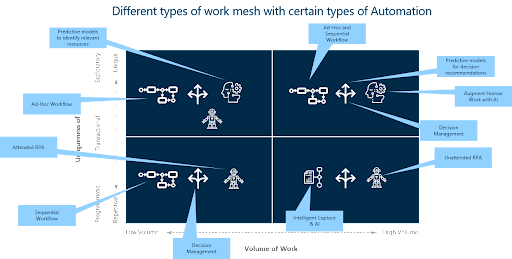
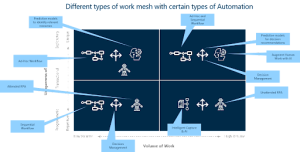
Now that we have a framework defined, we can start to classify what type of automation will fit with the type of work being done. Not all work is created equal. Some work is a great fit for automation. Some work can be augmented by automation, and some work can’t be automated, but it can be enhanced with AI. Figure 4 is a representation of how different types of automation can be aligned with the type of work being done.  

In the following weeks, we will add blogs to this series explaining how each component of Digital Business Automation is mapped onto our Automation Alignment Matrix based on the type of work being done. This set of blogs will encompass Tasks, Workflow, Decisions, Content, Capture, and AI. At the end of this series, you should have a highlevel understanding of how to align the right type of work with the right type of automation. 

Lately, we’ve been speaking with a lot of companies about what a Digital Business Automation (DBA) platform is, and how to best leverage the powerful capabilities offered. While many companies are comfortable with the technology aspect of DBA, we hear a lot of confusion related to what type of organizational structure and methodology to use with DBA. In the past, for both our customers and ourselves, it has been sufficient to say here is “the tool” you need, and this is the org structure and methodology you’ll need to get the most out of it. With more and more focus on digital automation, that has changed a great deal. Today we’re going to focus on what DBA means from an organization perspective. That is, what does it take to build a DBA practice within your organization?

First, let’s define Digital Business Automation. At its simplest, it is a platform which allows you to automate repetitive and mundane tasks, workflows, and rules so you are freed up to focus on more complex tasks requiring human interaction (See Free the Humans). It’s really about automating the mundane, so organizations have the freedom to be great. The platform components enable organizations to model processes, capture unstructured data, manage content, execute workflows, automate decisions and tasks, and have great User Interfaces for using and benefitting from these tools. Of course, we must have a touch of AI and Analytics included (<sarcasm> you can’t have anything without AI these days </sarcasm>). For this discussion, we’ll focus on the pillars of Modeling, Tasks, Workflow, Decisions, Content, and Capture.

See Digital Business Automation Overview video for more information.

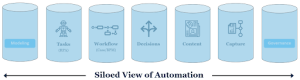
Before we describe the Digital Business Automation organization, let’s revisit the past. For convenience, let’s focus on a BPM Workflow implementation. Typically, as a company matured in their process automation capability from doing single projects to doing programs, they would set up program governance which would consist of a few Practice Areas such as Support, Infrastructure, Process Strategy, and BPM Solution Delivery. However, what this did was create a biased effect where every project this organization reviewed had to fit into a Business Process Management Solution (BPMS, or Workflow). If it didn’t, they would typically make it fit. More importantly, any methodologies, reusable artifacts, and frameworks developed would be very specific to BPMS. In our experience, this effect extended across all pillars of Digital Business Automation and created silos. While within each pillar/silo some companies have good practices and methods, there isn’t visibility across these silos. In the example of Workflow, there may be great best practices and methodologies for how to implement whatever flavor of BPMS they have, but there is no relation to Decisions, Tasks, Content, etc. In other words, if you are in the silo, things are great, but if you are outside of the silo, it is very difficult to see in.

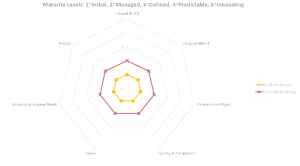
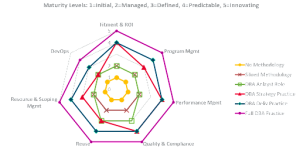
What this siloed approach creates, even if there are mature methodologies and best practices within the silos, which many companies do not have, is a lack of repeatability, reuse, and documented processes for automation. In one recent engagement, during two weeks of analysis, we found close to $1M in wasted work due to creating the same things over and over within the Workflow area. Imagine if we had spent more than just two weeks doing the analysis, not to mention the implications if we had quantified duplicated work/capabilities across ALL of the Digital Business Automation pillars (silos). If we look at this from the perspective of Salient’s Digital Business Automation Maturity Level framework, this type of siloed approach to grade out approximately as in Figure 3:

Figure 3: Siloed Digital Business Automation Maturity Level

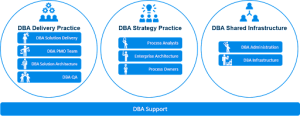
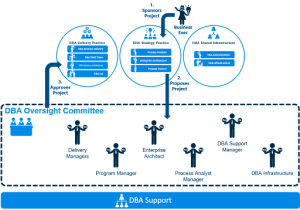
A big part of fixing this siloed view is accomplished through organizational structure and methodology. We’ll focus on the organizational structure and leave the methodology piece for another day/blog. We’re also going to leave any details around infrastructure to another day, although Shared Infrastructure is a critical piece of your DBA org. What we propose is setting up DBA Strategy and Delivery practices, which will be part of a triumvirate, including DBA Shared Infrastructure, which will form DBA Oversight. These practices will be separate but equal, and interact frequently. Figure 4 represents a 20,000 foot view of the practice spheres.

Figure 4: DBA Oversight

The DBA strategy practice consists of Enterprise Architecture, Process Owners, and a focused role of DBA Process Analyst (focused because they are not only a process analyst, but also understand Digital Business Automation; maybe we should call them an Automation Analyst). The DBA Strategy practice is responsible for defining automation goals, setting the course for DBA initiatives, and defining strategy and long-term planning for DBA initiatives (all from a business perspective). The group will also advocate Digital Business Automation as a core competitive differentiator within the organization. Lastly, they are responsible for eliciting and tracking critical business KPIs and measuring the overall success of DBA initiatives across projects.

Within the DBA Delivery Practice, we have Solution Delivery, the Program Management team, Solution Architecture, and Quality Assurance. The Solution Delivery team represents all of the delivery teams for the technical components, or pillars, of DBA. That is, Workflow, Tasks, Decisions, Modeling, etc. As a group, the Delivery Practice is responsible for project deliverables, a scalable delivery model, hiring DBA talent, tactical best practices, reusable assets, and architecture design specific to projects.

We won’t delve into Shared Infrastructure here much since that is a moving target with companies having on-prem, cloud, and hybrid infrastructures which need to be taken into account. We will tackle this in a separate blog. Suffice to say, this sphere and team play a critical role in Digital Business Automation.

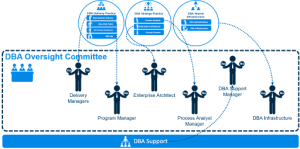
The way these overarching teams interact to provide governance and oversight will vary based on your organization, but what follows is a framework you can leverage to merge into your culture. Figure 5 shows how representatives from each of the core teams of DBA Governance can form an Oversight Committee. This Oversight Committee should consist of Delivery and Project Managers from the Delivery Practice, Process Analyst Managers and Enterprise Architects from the Strategy Practice, a DBA Infrastructure representative, and let’s not forget the Support organization. 

Figure 5:

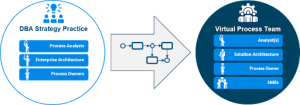
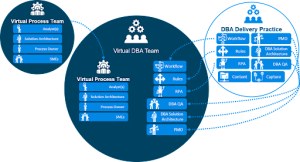
To show how these teams would typically interact and provide oversight, let’s walk through a scenario. A business executive sponsors a project and asks the DBA Strategy team to take a look at it. In order to vet the process, the DBA Strategy team would form a Virtual Process Team which consists of one or more Analysts, Solution Architects, SMEs, and a Process Owner assuming we are focused on one process. If more than one process, there could be multiple process owners. Figure 6 is a representation of the Virtual Process Team.

Figure 6:

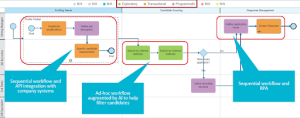
There are a couple of approaches we can take here. One approach is what is today called many different things, but is essentially Process Re-Engineering (Digital Transformation is just a modern version of Process Re-Engineering). This is a “let’s start from scratch” endeavor in which we incorporate Design Thinking to rebuild from the ground up to create a new and innovative process. However, that requires a separate blog or two, so we’ll stick with modifying existing processes and focusing on what parts can be automated. With this approach, we want to break a process down into its component tasks, determine which ones can be helped by automation, and then analyze what types of automation best fit the type of work. Figure 7 is one way to represent the different types of work and what component of automation might apply based on our Automation Alignment Matrix. Figure 8 is the Automation Alignment Matrix, which allows the DBA Strategy team to use a guided approach to what type of automation best fits the type of work.

Figure 7: Analyze process for type of work being done

Figure 8: Automation Alignment Matrix (just a representation; your situation could be different)

Once the DBA Strategy team has done their analysis, which should include cost-benefit analysis, they’ll either propose the project to the DBA Oversight Committee or discuss with the Project Sponsor (typically a business exec) why this project isn’t a great fit for Digital Business Automation. One thing to note here is this does not mean the business should not go out and do DBA on their own. It is quite possible the DBA Strategy team could say it isn’t a good fit but the main reason for that might be bandwidth or other projects having a higher cost-benefit return and thus this project isn’t a priority. This requires a different blog, but by no means should an organization avoid automation because their IT department can’t keep up. In fact, this might be a primary driver for why the way IT is doing automation needs to change. I digress…

Let’s assume the DBA Oversight Committee approves the project. We will then want to form a Virtual DBA team. Remember, we had our Virtual Process Team review this proposal earlier in the vetting process, so ideally we will want that same team to be part of the Virtual DBA Team we form for this effort. Continuity here is critical as the Virtual Process Team has already done some high-level analysis and thus are very familiar with the process and overall pain points. This continuity will help streamline the project and determine which resources from the DBA Delivery Practice -> Solution Delivery team are necessary. 

In Figure 8, we can see the Virtual Process team has been added to our Virtual DBA Team. Also, based on the analysis the Virtual Process team did with Salient’s Automation Alignment Matrix, we add to the Virtual DBA team RPA, Workflow, and Rules solution delivery experts because the analysis indicated these were the areas of automation needed. Naturally, we’ll need Solution Architecture, Project Management, and QA as part of the effort.

If we look back at our original picture of the DBA Org and Oversight Committee, we can see how this would flow. A Business Exec, or even an IT exec if IT is the target for automation, sponsors a project to the DBA Strategy Practice. They will vet the proposal to determine whether it is a good fit for Digital Business Automation. If the Strategy Practice believes it is a good fit, they will propose it to the Oversight Committee, who would then vote as to whether this project should be taken on, and when it can be taken on. Assuming approval, the project moves to the DBA Delivery Practice, which will then form a Virtual DBA Team which combine technical, analyst, and business resources to give the proposed solution the perfect balance.

Figure 9: Virtual DBA Team – Form based on the types of automation tools needed.

With this Digital Business Automation organization in place, or even as you iterate towards this type of organization (iterating towards this is the safer approach with better odds for success) you’ll see your organization’s DBA maturity start to greatly improve and increase your levels across the areas of ROI, DevOps, Quality and Compliance, and especially Reuse. Figure 10 illustrates what your organization could expect from a maturity perspective as you scale out your DBA Practice. The recommended approach is to start with making sure you have a dedicated team of DBA Analysts, then creating your DBA Strategy Practice, then pulling together the DBA Delivery Practice sphere, and then bringing this all together by having these areas work together in concert as a full DBA Practice. 

Figure 10: Healthy DBA Practice Maturity

This blog laid out a very high-level overview of one approach to a Digital Business Automation organization. You can leverage this information to create a well-balanced automation team based on the overall goals of the business, and more importantly, take an approach to automation which is holistic and matches the right type of automation with the right type of work. The devil is always in the details, so we’ll expand on many of these areas via follow-up blogs in the coming weeks and months.

Demystifying DBA


Author: Geoffrey Hamm, Sr. Automation Advisor



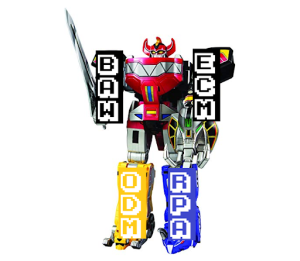
Over the past few years, IBM has consolidated several products to form one comprehensive Digital Business Automation (DBA) platform also known as Cloud Pak. As a child of the 90’s, it reminds me of when the Power Rangers joined forces to become “Megazord”. Often referred to as “greater than the sum of its parts,” this is not exactly true, as many of the contained offerings have functional overlap. A better takeaway from the platform push is that it alleviates the pressure to get the most out of any one product, which has historically led to bastardized solutions. This is extremely good news.


If you are a prospective or current user of the IBM Automation Platform for Digital Business (a common rearrangement of DBA), you have probably been hearing a lot of three letter acronyms like BAW, ODM, DPA, ECM, RPA, ICM, and you may be thinking WTF?

WTF = Why the frustration?

I am here to help demystify the DBA platform.

Let’s rewind the clock.

Enter DPA

Three Letter Acronym #1:

DPA = Digital Process Automation

DPA was the first run at consolidation.


DPA includes BAW, ODM and (depending on who you’re talking to) RPA. Fear not, all acronyms will be explained.

You may be keen to the fact that “process” is a more specific term than “business.” You may also be wondering if that means that DPA is more specific than DBA…

You’ll find out soon enough.


First, let’s bust some more acronyms…

Three Letter Acronym #2:

BAW = Business Automation Workflow

BAW is a tool used to model, automate, change, monitor and optimize core business processes to improve consistency across tasks and processes, increase productivity and straight-through processing.
BAW = BPM + ICM

BAW is the combination of Business Process Manager (BPM) and IBM Case Manager (ICM). Historically, BPM handled predictable, structured processes performed by clerical workers; whereas, ICM handled unpredictable, unstructured processes performed by knowledge workers. What we’ve learned from these products being partitioned is that they should not be partitioned. There is too much fluidity between structured and unstructured processes.

Three Letter Acronym #3:

ODM = Operational Decision Management

ODM is a tool used to capture, automate and manage business rules to encourage rapid adaptation to change, increase the consistency and auditability of decisions, and detect problem situations in real time.
This tool allows us to execute very sophisticated rule sets very quickly. Can you imagine trying to calculate airfare by hand with all the variables at play (distance, demand, time of the day, day of the week, season of the year, historical data, etc…)? Me neither. By the time you had an answer, it would already be irrelevant as so many of the aforementioned variables would have changed.

Three Letter Acronym #4:

RPA = Robotic Process Automation

RPA is a tool used to record and automate repetitive human tasks to automate mundane work, eliminate copy-and-paste and data entry errors, and free employee time to do higher-value work.

In essence, RPA emulates a human’s interactions with their operating system – The Phantom of the Opera…ting system. I’m sure I could come up with additional ghost-themed metaphors, but I’ll spare you for now.

This is the only tool on the platform that IBM has not acquired. IBM has a strong relationship with Automation Anywhere however, and Automation Anywhere plays very nice with its siblings in the DBA family.

And there you have it:

DPA = BAW + ODM + RPA.

So, we’re done? Not quite.

Enter ECM.

Three Letter Acronym #5:

ECM = Enterprise Content Management

ECM is a suite of tools used to provide highly secure and compliant management of most types of content, support instant access to content, connect content to digital business applications and help manage governance and compliance.

This suite contains several products including IBM FileNet, IBM Content Manager, IBM Content Collector, IBM Enterprise Records, IBM Content Classification and IBM Watson Explorer. All these products deal with content in some form or fashion.

Data Capture, non-acronymic, is another component which sits inside the DBA portfolio. Although it sits outside the ECM umbrella, it is tightly coupled – ingesting documents with ECM being the final destination.

The reality is that a lot of operations revolve around content (i.e. a document comes in and someone must process it, or a client requests a document that has to then be located or generated, etc…), thus ECM was included in the platform.

The problem is that DPA + ECM ≠ DPA

Enter DBA.

Three Letter Acronym #6:

DBA = Digital Business Automation

Let’s review the math.

DPA = BAW + ODM + RPA

DBA =DPA + ECM

Thus…

DBA = BAW + ODM + RPA +ECM

There are a few other offerings as well, but these are the four “pillars” of the IBM Digital Business Automation platform.

To add one additional layer of complexity, these acronymized pillars also have what I refer to as “street names”. Here’s a terminology conversion table to help make this all make sense:

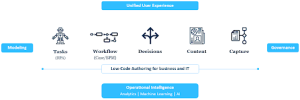
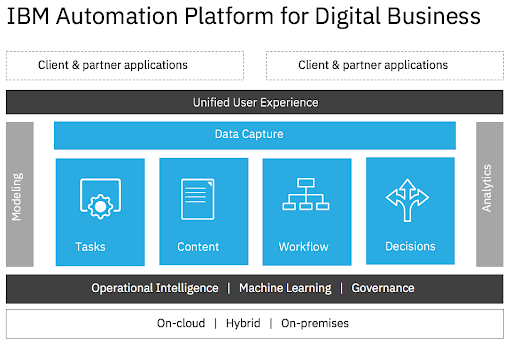
Now the following graphic should make more sense. You’ll notice the four pillars with operational intelligence, machine learning, governance and a variety of deployment options underneath. Data Capture sits across the pillars as a means of ingesting documents. And across the entire platform exists a unified user interface – Navigator.


Here’s a full conversion chart for your reference. This includes a few products and competencies not discussed in this article, so expect more on these at a future date.


What it means is that you shouldn’t have to decide whether you need ODM more than BAW, or RPA more than ECM, or if RPA can work in lieu of BAW. The truth is that you need it all, and it depends on which aspect of your operations you are automating as to which product you use at that point in time.

To return to my world-class Power Ranger analogy from the introductory paragraph, you shouldn’t have to decide if you are going to use Megazord’s arms or legs, nor should you have to figure out how to make an arm act as a leg in certain situations. DBA is fully equipped with both “arms and legs,” so you can pick things up without compromising the speed at which you run.

With the IBM Digital Business Automation platform, you can automate all of your operations without compromise…

You just have to learn a few acronyms first.


Let’s Chat!

START YOUR Digital Business Automation JOURNEY TODAY

CONTACT SR. AUTOMATION ADVISOR, GEOFFREY HAMM HERE TO learn more


MORE ON Digital Business Automation:
MORE ON SALIENT PROCESS:

Salient Process is a full-service digital business automation shop and proud IBM Automation business partner. To learn more about us at our website, request a free consultation with one of our expert automation advisors! We look forward to guiding you and your company along your own unique Digital Business Automation journey.


STAY CONNECTED

👉Subscribe to Bots & Thoughts: The Digital Business Automation Podcast

👉Subscribe to our Spotify Here

👉Subscribe to our Apple Podcast

👉Subscribe to our Google Podcast Here


⏩Subscribe to Salient’s Monthly Newsletter Here 

🎤Be our next guest! Sign up Here

📲Contact our Podcast Host Here 


  ⏩LinkedIn

👉 Follow Bots & Thoughts on Here

👉 Follow Salient Process Here

👉 Follow our Podcast Host Here

  ⏩Youtube 

  ⏩Twitter 

🌐Learn more at Salient Process

The Client

One of the World’s Five Largest Airlines

Business Challenge

The client selected IBM Operational Decision Manager (ODM) Advanced to implement a series of Revenue Integrity-focused solutions. The solutions consisted of both new initiatives and the replacement of existing processes that were scheduled to be sunsetted. The client had limited ODM experience, a short runway to get the first version of the solution into production, and a desire to use existing staff rather than significantly expand personnel.

The Solution

Salient Process provided Managed and Expert Services, facilitating the design and development of the solution architectural framework, the training and development of the client’s development team and rule authors, and the development and ongoing evolution of the organization’s ODM Best Practices and Development Methodologies.

A Low-Flying Process

The Revenue Integrity Group is responsible for maximizing revenue and minimizing loss through fraud by monitoring and responding to activity made to flight itineraries consisting of those flights operated or marketed by them. They made the decision to replace and upgrade existing systems used for this purpose using IBM ODM Advanced. In addition to the existing solutions that were targeted for a complete replacement, and those which ODM was to provide significant enhancement to, there were greater than 150 additional new use cases identified as potential opportunities for ODM.

The client intended to use their existing development team and subject matter experts to build and manage the ODM based solutions, but the existing team had minimal ODM experience. Expanding the team with highly experienced full time permanent staff was not a viable option and additional training was not going to build the level of expertise needed in the required timeframe to meet the tight timelines they had set for themselves.

Salient Results

By supplementing their organization with the correct expertise, delivered at optimal points consistently and throughout the development and ongoing management of their ODM Advanced solutions, the organization has been able to meet and far exceed their initial expectations and requirements.

  • The business can now implement Decision Logic changes and deploy them to production within hours.
  • IT maintains and extends a versatile and high-performance Framework based on evolving industry standards and best practices.
  • IT and the business have a very collaborative ongoing process for enhancing and enriching the Solution Framework.

Salient Process provided the expertise and guidance to meet and ultimately exceed their stated goals for ODM. We did this by providing support in the following areas:

  • Closing the Skills Gap: Provide ODM integration and Rule Artifact development guidance and direct deliverables, then provide Rule Authoring guidance and direct deliverables
  • Best Practices for Architectural Leadership: Participated in and/or lead architectural design sessions, build and present POCs to assist in the decision-making process, and build Reference Implementations of complex concepts or techniques to be used as a guide for implementation as part of the Solution Framework.
  • Training and Mentoring: Deliver regularly scheduled, agenda-driven training sessions, deliver ad hoc situational one-on-one training, and deliver written instructions based on current and relevant topics.

Salient Process drove the architectural direction and provided direct tactical deliverables, working as part of the IT delivery and rule authoring teams. Extensive knowledge transfer and training was based on the work produce delivered by Salient Process. Additional formal training was provided for specific concepts as they became critical components of the solution. As the client’s expertise evolved, so did their needs. Salient Process then focused more heavily on Best Practices and Architectural Leadership with heavy mentoring, and less on direct deliverables.

Having such a flexible amount of access to this level of ODM expertise has allowed the client to more rapidly and consistently build and enhance their ODM solution. At the same time they were able to build an extremely talented ODM development team internally from their existing Java development staff. They are also confident that their solutions are following Current Best Practices that are regularly evaluated against future trends.

At Salient Process, our purpose is to enable organizations for higher level thinking. Part of delivering on this purpose is making sure our clients are able to stand on their own without the need for full-time consultants to achieve their goals. Through our Expert Services enablement, the client is now mature enough to where Salient only acts in an advisory capacity. Our job here is done.

The Client

A Fortune 500 Warehouse Retailer

Business Challenge

This Warehouse Retailer’s non-foods quality assurance (QA) process was done via spreadsheets, phone, PDF reports, and email. There was no single process for quality assurance globally, thus each different country/ geography {“GEO”) had variations of the process. This led to issues with compliance, continued usage Suppliers who should have been blacklisted, and lots of unnecessary rework.

The Solution

Salient Process led the digital business automation of a non-foods quality assurance process leveraging IBM Business Process Manager (BPM).

A Risky Process

When this warehouse retailer purchases the items you see in their stores, they have to make sure these items are of the quality their customer base is used to, and also of the quality various governing bodies require. They work with their own company buyers, third-party quality assurance testers, and the suppliers themselves in a delicate dance to make sure the items you purchase are of a high enough quality. The quality assurance (QA) process is global and is highly complex. This process was previously done via email, spreadsheets, phone, access databases, and PDF reports. Because of this, things inevitably fell through the cracks and compliance was at risk.

There were disparate procedures and steps for performing QA, and things only got worse in the global picture. Over the previous decade, many different off-the-shelf products and custom QA applications were deployed and tried, but with little to no success. The supplier watchlists and blacklists were still maintained manually, and by different geos. In many situations the company would continue to procure products from suppliers on the black/watch lists as buyers in other GEOs, or even the same GEO, would be in dark because of the manual nature of the black/watch lists.

These challenges with the previous process were putting the retailer at huge risk of non-compliance and fines, since if they continued to use a supplier who it was known produced sub-quality or non-compliant goods, the company could face sanctions, law suits, and what may be the worst fear for a global company: a viral video of a substandard product which puts the company in an extremely bad light.

Salient Results

By standardizing on one business process and leveraging IBM BPM as the overarching controller of this process. this retailer was able to create a definitive set of quality assurance procedures using a cloud-based platform. This eliminated manual steps in categorizing and storing reports, emails and audit trails. It reduced wait time, manual errors, and lag in tracking not just for the department staff, but also for external third-party test labs and auditors. The overall results were quite impressive. The Quality Assurance team was able to achieve an 80% reduction in test request processing time, an 86% reduction in the amount of time it took to do a revision of a test request. and a 300% increase in their audit capacity. Overall, they saved 7% of their total yearly person hours in their department due to this digital business transformation.

Because the information about test requests and result has been digitized via IBM BPM, and is now systematically stored in a database, the time spent manually looking for reports and storing them has been reduced 100%. Now, process participants have the data pushed to them as part of the process when they have a task to perform. Previously, it was a challenge just to find the right test request for an item as part of the quality assurance process. Now, it is available at the touch of a button.

With greatly improved efficiency, the QA department was able to keep up with the global growth and introduce testing programs in multiple new global locations. The process application gave them necessary visibility. Globally shared results provided the purchasing department with feedback on suppliers and manufacturers. Because the solution was cloud-based, the results could also easily and transparently be shared with suppliers and factories. Previously, a blacklisted supplier or factory could easily fall through the cracks and be used again due to lack of visibility. With their process now digitized, visibility makes data retrieval more acurate, making these types of mistakes less likely.

In certain parts of the world, there are legal requirements for documents and data regarding the QA of an item that have to be produced in as little as 24 hours to prove compliance. Before digitizing their process, this was a scramble drill for this retailer. Now, this is a walk in the park. The limitation is now much more dependent on network bandwidth rather than how much time it would take to search through a file repository. The information can be easily retrieved within seconds.

The centralized proces also makes training much easier, not only for the QA department, but also for external participants such as suppliers. Because process performance is tracked both at a process and task level, there is an unbiased recording of data, they can see where an employee is lagging in performance vs. their peers. The retailer can determine if a new employee is ready to have less supervision or will still require hand-holding. The process visibility and measurement allows for data based decisions with regard to employee performance.

The benefits for this retailer don’t just stop with the powerful and ROI generating changes made to their process. Salient has enabled their team to carry the IBM BPM torch, so we are no longer needed there. We helped them standup a full IBM BPM Center of Excellence through strategic guidance, Boot Camps for their employees, and overall mentoring.

At Salient, we like to say our job is to get fired for the best possible reason, which is the client is now mature enough in our technologies to move forward without us. Our job here is done.

The Client

A Fortune 100 Warehouse Retailer

Business Challenge

The Warehouse Retailer’s procurement process was done via spreadsheets, phone, and email. This inefficient process caused a high amount of re-work, a lack of visibility, difficulty in training new employees, and missed compliance steps. All of these issues were costing the retailer a great deal of money and missed opportunities.

The Solution

Salient Process led the implementation of a global procurement process leveraging IBM Business Process Manager (BPM).

An Unwieldy Process

The items you see in this giant retailer’s warehouse are sources from all over the world. The Buyers have a great deal of flexibility and responsibility to choose items that are appealing to the market. However, their process for purchasing these items had become unwieldy. It reached a point where the Buyers were spending more time administering and manually completing the process than focusing on finding great items.

Until this retailer worked with Salient to improve their procurement process, it was done by a mix of email, spreadsheets, phone calls, and a legacy mainframe system. It literally took a stack of papers inches high to get an item for their warehouse approved and ordered from a supplier. This created some painful compliance problems. It also created a situation in which the Buyers, who are core differentiators when they can primarily focus on buying. were spending too much time on paperwork, compliance, and email – and not enough time on strategizing purchases.

As a global company, each country has its own buyers. Previously, each country’s set of buyers had their own process and might be completely unaware that they were buying the same items as their counterpart in another country. In fact, they were sometimes bidding against their own company because two buyers from separate countries had no idea the competition was themselves. In effect, they had met the enemy, and it was their own co-workers.

Salient Results

At Salient, our purpose is to enable organizations for higher level thinking. Whenever it makes a process more effective, we always aim to automate and optimize so mundane tasks can be avoided and higher level thinking activities are focused on. By standardizing on one business process and leveraging IBM BPM as the overarching controller, the Buyers were able to remove mundane and repetitive tasks from their daily work, and focus on what they do best – buy great stuff.

The results speak for themselves. The client expanded the number of items being purchased globally by 2000%, increased their buying power to the tune of $54M* in savings per year, reduced the number of global buying processes from over 200 down to 1, and decreased the average number of contacts a supplier needed to interact with by 92%.

The IBM BPM solution Salient delivered introduced much greater transparency and visibility for the client’s procurement process.

One benefit of this increase in visibility is the client’s disparate global buying teams are now able to act as one unit and leverage more purchasing power. An example of this is an item they purchase regularly. They were able to decrease the cost of this item by one penny per unit because of the consolidated purchasing power they now have. Their increased buying power on just this one item saves them $416K per year. This type of global buying power across all the items they buy extrapolates to saving $54M* per year.

The business process management solution Salient and the client implemented has caused a large reduction in the number of individual contacts a supplier has to work with to enable an item to be purchased by the client. In some cases, this had been as many as 51 different individual contacts due to the process being spreadsheets, phone, paper, and email-based. Now there are a total of 5 different contacts any supplier needs to interact with, and the IBM BPM process seamlessly directs the Supplier to the right person, with the right data, at the right time. The Supplier doesn’t have to worry about who they need to interact with at each step of the process.

The benefits for this retailer do not stop with the powerful and ROI generating changes made to their process. Salient has enabled their team to carry the IBM BPM torch, so we are no longer needed there. Salient helped them standup a full IBM BPM Center of Excellence through strategic guidance, boot camps for their employees, and overall mentoring.

At Salient, we like to say our job is to get fired for the best possible reason, which is the client is now mature enough in our methodologies to move forward without us. Our job here is done.

*$54M is an extrapolation and expected savings. Results will vary depending on the overall market and the number of worldwide buyers who choose to participate in buying an item.

The Client

One of the Largest Energy Companies in the U.S.

Business Challenge

For an energy company, handling power outages and restoring power in the least possible time is a core
business objective. At this energy utility, the power restoration status check process was done manually by technicians. There was no automated way to identify and filter power outages where power has been restored automatically, which usually happens within a couple of minutes. Because of this, technicians had to manually check every outage. This caused unnecessary labor costs which end up increasing the cost of energy overall.

The Solution

Salient Process helped the client automate the power restoration status check process and exposed the business logic rules using IBM Operation Decision Manager (”ODM”) business events.

A Disconnected Process

When there is a power outage in your neighborhood, there are all sort of things that happen in the background at your local utility. One of these things is the utility needs to determine where outages are, and whether the power for that outage has already been restored. In most cases, a power outage is restored within a couple of minutes.

Prior to Salient’s arrival on the scene, when power outages were reported, someone had to evaluate the reported outage and confirm power is down. This was a manual process requiring a specialized technician to investigate the outage. In addition, when a power outage was caused by a ground fault, supervisors had to check them manually and then assign technicians to work on them. Due to a lack of automation, many times there was confusion and multiple field technicians would be assigned to the same outage when only one was necessary. All of this combined to create unnecessary labor expended.

Salient Results

At Salient, our purpose is to enable an organization for higher level thinking. Whenever it makes a process more effective, we always aim to automate and optimize so mundane manual tasks can be avoided and higher level thinking activities can be focused on. By automating the analysis of events to determine if a reported power outage is true, this massive energy company was able to remove the mundane and time-consuming task of having to confirm every power outage manually. This allowed them to shift resources to making sure there are even fewer power outages than were occurring before. And of course, it saves a great deal of labor since this power outage confirmation and identification is now automated.

Salient Process worked with the utility to build a solution based on correlating heterogenous events that occur during power outages. The correlation of these events allowed the utility to automatically determine whether an outage was real, and make sure the real outages had the right number of technicians assigned to work on fixing them.

Salient leveraged IBM ODM as the events and rules solution. It was an ideal fit for the high volume of heterogeneous business event types from multiple sources and complex patterns that occur in no particular time or order when there are outages. ODM was able to easily correlate the outage and restoration notifications, map the notifications that emerge from a circuit, and then apply business logic to send to other systems to take the next best action.

Due to this, there has been a drastic decrease in unnecessary manual hours of technicians in verification of power restoration and fixing ground faults. This helps make sure technicians are being used for better things at the utility. Of course, an ancillary benefit is a quality and reliable system to ensure power restoration leads to happy customers and a good business reputation.

One of the other great features of IBM ODM is the exposure of business rules to the business team not only gives them visibility into what rules are being applied, but it allows the business users to change the rules as necessary. These business users can do this without any involvement from IT or the need for a new push to production. Due to the success and ROI of this initiative, the utility decided to use IBM ODM for other projects, which Salient also helped with.

The Salient team came up with the overarching solution, developed the project from inception to delivery, and trained both the business and technical teams in understanding the nuances of the IBM ODM solution. This group of technical and business people is now able to analyze their requirements to harvest the necessary business rules to automate their business. Salient also trained the utility’s infrastructure team in how to properly install IBM ODM instances so they were enabled to do the work on their own.

Our goal with customers is always to at some point be told, “You know, you were great, but we just don’t need you anymore. Our people can now take on the load!’ Salient has enabled this customer to carry on without us. Our job here is done.

The Client

A Fortune 10 Pharmaceutical Distributor

Business Challenge

In a healthcare distribution ecosystem where time is of the essence, discrepancies arise when service contract changes do not reflect across all systems in the least amount of time possible. Revenue losses, wastage, errors, and reduced cash flow are just a few of the consequences of unreliable data in the system.

The Solution

Salient Process led the efforts to optimize and streamline the service contract change process by leveraging IBM BPM on the cloud. This was a three-step solution:

  • Consensus in the change process
  • Repeatable and predictable execution
  • Integration with other systems

An Unreliable Process

Service contracts change due to numerous reasons – changes in price, policies, and logistics, among others. In a healthcare distribution system ecosystem where time is of the essence, these changes need to reflect across all systems in the least amount of time to minimize discrepancies at various levels. The fact is these discrepancies happen frequently.

Impacts of these discrepancies include:

  • Incorrect billing for extended periods of time
  • Time and effort spent in manual processes of tracing/auditing/correcting the ripple effect of contract change in other connected systems
  • The possibility of errors induced in the correction cycle itself
  • Non-satisfaction at all levels of doing business

In this case, there were revenue losses, wastage, and reduced cash flow, and it made the system unreliable. It also required an incredible amount of support from an already overloaded IT team.

Salient Results

Salient Process is an expert in optimizing and automating to make processes more efficient. With this in mind, we led the efforts to streamline processes that manage change in service contracts through IBM Business Process Manager (BPM). The three-part solution enabled the client to control costs, improve quality, and develop efficiencies.

The first part of the solution is a consensus on the change process. By utilizing the simplicity and collaborative features of IBM Blueworks Live, Salient was able to bring a common understanding and acceptance of the process. The instilled confidence in the SMEs that the process they were helping model was the process that the platform would execute.

The next part is a repeatable and predictable execution. The rapid development with immediate and continuous feedback from SMEs during mini and full playbacks have clear visibility into the process application functions. The business users were able to provide quick validations to our implementations.

The solution also enabled robust integrations with many upstream and downstream systems. Through the SPARK Salesforce Toolkit, we achieved a two-way integration with Salesforce to automatically fetch new correction and update resolution information and case status – thus, saving time and reducing errors. Aside from this, we were also able to integrate with other systems, namely Azure, Database, SAP ECC, ODS, HANA, and ImageNow. Fetching, routing, and storing appropriate data is attained through Enterprise Application Interface (EAI).

One of the key features of the solution is Intelligent Task Assignment. Processing invoice correction requests requires proper assignments of tasks to the associated business users. Before the implementation, managers were forced to perform the non-value adding work of assigning tasks and managing work queues. By Mapping invoice correction attributes to the right user role and skills, we automated task assignment. To provide flexibility, we also provided a manual override.

Salient built this solution with change in mind. By using an enterprise service bus for its true purpose, the system can scale to handle a higher number of requests and is not bound to any specific CRM, ERP, or data storage system. With our comprehensive view of consolidated data from and through various systems, we understood it was not possible to incorporate every research scenario, and so we made provisions for import/export of data from and to Excel files as well. Eliminating that due to subjectivity in the research involved achieved a drastic improvement in accuracy and compliance.

In addition to increased visibility of request turn-around, clarifications, and status, improved auditability and traceability of corrections are also apparent. The progression of the invoice change request process through various stages of user activities and automated tasks creates a trail.

Furthermore, the improved auditability not only encourages adherence to controls, but also provides insights into training opportunities and human resource planning. More accurate attribution of errors as reflected in supplier scorecards offers better visibility into supplier responsibilities and top issues. The solution also reduced the client’s liability by ensuring that the necessary supplier approvals were secured for chargebacks when needed, per service contract additions.

By automating steps to coordinate data flow through different systems, the analysts were freed up to do more proactive corrections, consequently improving customer satisfaction. By enabling the client to focus on high level thinking instead of mundane tasks, Salient can say that our job here is done.