

Benefits and Examples of Automation in Education

Automation is a complementary tool that offers an immediate way to improve efficiency, productivity, and employee performance in nearly every industry. Today, automated solutions are a must-have, helping organizations reduce repetitive and monotonous tasks normally done by hand. The result is lower stress, improved compliance, and reduced human error across every department. 

Automation in education empowers institutions with ease of management and optimized workflows. With the right automation services, leaders in education can reduce manual processes and focus their efforts on delivering high-quality education to students. We’re here to discuss workflow automation in the education sector and how you can leverage it to transform your workflows.

What Is Education Workflow Automation?

Education workflow automation refers to the powerful digitalization that higher education institutions employ to streamline their administrative processes. Automated systems, technologies, software, and tools are some ways an organization can automate its workflows.

One of the primary goals of workflow automation is freeing up staff time by minimizing manual, time-consuming tasks. Automation in education enables administrators to improve the student experience and achieve better results. An automated school or university may also have a greater capacity to support the needs of its students, teachers, and staff members.

Examples of Automating Educational and Administrative Tasks

Consider how much faster, simpler, and easier your operations would run if your tasks were consolidated. Automation makes this possible. Here are some potential ways you can use automation to streamline educational and administrative processes. 

1. Registration and Admissions

Student admission, enrollment, and course registration involve various documents and applications. The onboarding process for new or transfer students can become frustrating when pages go missing or they have to wait for materials in the mail. Automation of administrative tasks reduces the repetitiveness required for student enrollment. Instead of manually reviewing each application and adding students to a shortlist, workflow automation lightens the workload on staff.

Automation benefits everyone involved with student admissions. For example, staff members can automatically process applications and e-mails while students can conveniently choose their classes online.

2. Attendance Tracking

Manually overseeing student attendance can be cumbersome, especially in a university or larger educational institution. An automated attendance system for schools makes it easier for teachers to identify whether students are present, absent, or late with the click of a few buttons.

This process enables teachers and parents to catch absences without notice and excessive tardiness. Instead of filling out registers and notebooks by hand, teachers can continue with their lessons and spend more time helping students.

3. Student Grading and Assessment

Think of all the time your teachers could spend on high-value tasks if they could automate grading. Even with the help of a teacher’s assistant, grading assignments by hand can be taxing and tedious.

You can implement automation to streamline grading homework, quizzes, tests, projects, and papers. Teachers will then have more free time to help students falling behind academically and receive feedback faster.

4. Teacher Recruitment and Evaluation

Employee onboarding automation is becoming more common. Automated solutions help businesses and organizations collect necessary data, send scheduled e-mails and texts, and streamline pre-boarding workflows. Automation can boost teacher recruitment and help educational institutions create an efficient, positive hiring process. During interviews and evaluations, administrators can use automation solutions to create digital forms that help everything run smoothly.

5. Administrative Functions and Compliance

A critical aspect of running an educational institution is complying with regulations. Relying on outdated, manual processes for document management can make it difficult to provide necessary paperwork during an audit or financial review. Additionally, documents like maintenance requests and permission forms can be sent out and completed much faster and automatically organized.

Automating your manual functions and minimizing the use of paper forms brings efficiency, agility, and transparency to your operations. Workflow automation in your administrative function can also minimize human errors that may lead to potentially costly and time-consuming issues.

Top Benefits of Automation in Education

Now that you can visualize the ways you can use automation in education, it’s time to examine the benefits of improving your workflows.

1. Reduce Errors

Performing the same repetitive and monotonous tasks every day can cause employees to be less engaged with their work, potentially leading to more mistakes. Automation can consistently perform these tasks without error, supporting higher-quality work. Digitizing these organizational processes can minimize issues like data entry errors and ensure accurate, consistent outcomes.

2. Attract and Acquire Top Talent

Attracting and retaining dedicated teachers is critical for improving student engagement and institutional performance. Workflow automation can significantly contribute to drawing in committed teachers and staff members. Ultimately, employees want to work in an environment that continually identifies and improves pain points. Leveraging technology enables you to reduce the workload and stress on staff, thus prioritizing learning and career opportunities.

3. Boost Productivity and Efficiency

Consider how many hours each week administrative staff members and teachers spend on manual processes. Repetitive, labor-intensive tasks like completing routine paper forms can hinder your institution’s performance. If you’re looking for a way to help employees focus on more strategic, high-level priorities, automation is key. 

An automated system enables you to develop custom workflows that free up more time for productivity and efficiency. Teachers who are overwhelmed with manual busywork can instead engage in critical tasks that directly impact the quality of student education. 

4. Streamline Communication and Collaboration

Communication processes can make or break your workflows. However, disconnected systems and poor visibility can make collaboration challenging and drawn out.

Education automation can help your administration create customized solutions that reduce bottlenecks. Automated processes make it easier to access, request, track, and create essential documents for key administrative functions, streamlining communication, approvals, and feedback across all departments.

5. Enhance Student and Staff Experience

Meeting the needs of students and staff is a top priority for any educational institution. With the combined benefits and uses of workflow automation, you can create a ripple effect of positive impact. Students can apply and enroll in programs more efficiently and receive feedback faster from teachers.

Students may also have increased accessibility to important information, services, and resources that improve their satisfaction with your institution. Likewise, administrative staff members have a reduced manual workload and spend less time retrieving and organizing physical files.

Learn More About the Value of Education Automation With Salient Process

Automating your most time-consuming processes can help take your educational institution to new heights. By automating your workflows, teachers can focus on developing effective learning opportunities and increasing student engagement. Workflow automation also enables administrators to make data-driven decisions and efficiently manage operations.

Whether you’re looking to facilitate collaboration or streamline your repeat admin tasks, Salient Process is ready to help you accelerate complex work. Our Digital Business Automation solutions are designed to meet your organization’s unique needs, from document management to data collection and beyond. Contact one of our experts today to learn how our solutions ensure seamless coordination.
Contrary to popular belief, automation isn’t reserved for the big guys. Small businesses can also find value in automating customer service, sales, marketing, and other processes. Explore the benefits of automation for small businesses and the tasks it can simplify.

Different Areas Your Small Business Can Automate

When it comes to workflow automation for small businesses, the possibilities are countless. Here are some of the most common processes companies automate:

1. Leads

Automation can manage leads through tracking, scoring, and prioritization processes. Your sales personnel can then dedicate their time to leads with a higher conversion likelihood, improving both productivity and sales numbers.

Your company can find and retain leads more efficiently than ever, thanks to automation. Here are some examples of using automation for lead generation:

  • Add a contact form to your website: When a prospective client fills out and submits this form, they’ll receive a prewritten response like “Hello, [First Name]! Thank you for your message. Someone from our team will be in touch with you shortly.”
  • Automatically assign leads to sales representatives: With the right automation software, you can auto-assign leads to your sales team based on specific criteria like location. As a result, your sales managers won’t have to spend nearly as much time allocating leads to the rest of the team. They can devote their time to more meaningful tasks like cultivating client relationships, building sales strategies, guiding the team, and chasing targets.
  • Offer free content: Consider offering free industry resources like PDF guides, e-books, and videos to display your expertise and potentially capture leads. Add a form to your website that allows people to sign up for an email newsletter and free content. When they enter their name and email address, they’ll receive these requested resources at the click of a button.

2. Sales

Automation can expedite a variety of mundane sales tasks, like data entry, follow-ups, and lead nurturing. Sales team members can free up their time to speak with prospective clients, forge customer relationships, and seal deals — all of which are key pieces to the sales puzzle.

Technology can automate various sales processes. For example, when the software identifies a new lead opportunity, it matches this individual with a sales representative. The sales rep can then call the prospect. If the call goes to voicemail, the software can send a follow-up email.

The software can mark a lead as “qualified” when it determines the prospective client has the authority and budget to make a buying decision. The rest of the sales exchange can play out from there. You can set up different automation features based on victories and losses, along with leads who aren’t yet ready to commit.

3. Customer Service

Automating responses to your business’s most popular inquiries saves significant time and labor. You can respond to customer inquiries in seconds. You can also personalize these automated responses for a humanistic touch.

You don’t need to frame a reply manually, double-check for typos and grammatical errors, or run responses by your team. Simply send a prewritten answer to a question by entering a short code unique to each response.

5 Ways to Automate Your Small Business

Now that we’ve explored the different small business tasks that can be automated, here are some specific features to consider:

1. Chatbots

A form of conversational artificial intelligence (AI), a chatbot simulates realistic conversation without human intervention. It generates natural responses using machine learning algorithms and pre-programmed scripts. Chatbots can answer common customer inquiries. If necessary, they can also redirect support requests to the appropriate team member.

Additionally, you can use chatbots to gather marketing data and provide personalized offers. Chatbots can support marketing campaigns by:

  • Offering information about products and services.
  • Engaging with prospective clients.
  • Encouraging sales.

2. Email Marketing

Automation tools let you send customized bulk emails to your target audience. You can craft an email message and deliver it to thousands of recipients. You don’t have to manually edit their contact information, names, and other details. You also don’t need to copy and paste your original content for every new message.

You can even automate the newsletter subscription process. The software can compile a list of subscribers’ email addresses and send them regular newsletters. Plus, you can split this list into segments — such as geographical locations — and deliver messages relevant to each group.

From scheduling social media posts to publishing newsletters, automation fulfills many repetitive marketing tasks.

3. Lead Assignment and Scoring

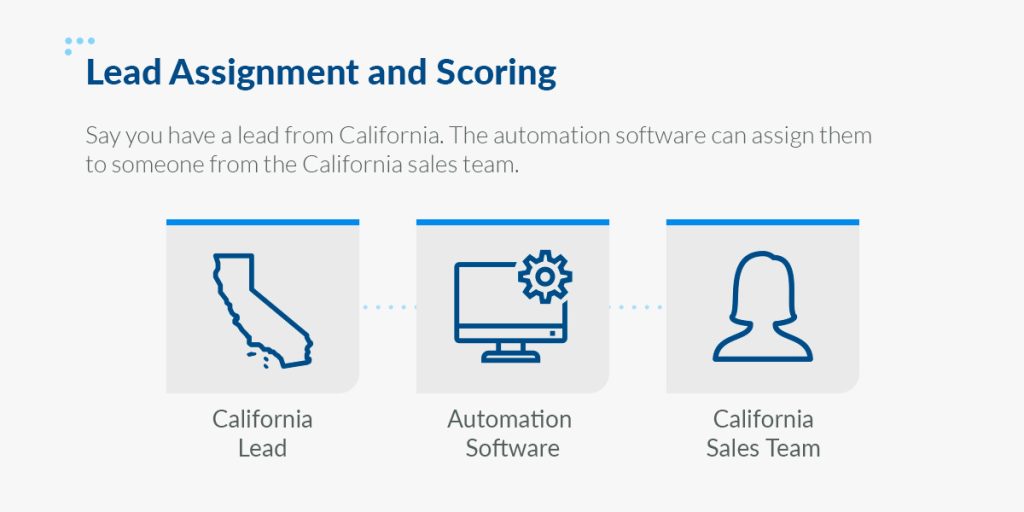
As mentioned above, automation can help you assign leads to corresponding sales representatives. Say you have a lead from California. The automation software can assign them to someone from the California sales team.

Additionally, automation can ensure more accurate and efficient lead scoring. It can quickly score leads based on predefined criteria, helping your business identify the most likely converts. Focusing on the most valuable leads saves considerable time and effort in the long run.

4. Calendar Entries and Bookings

Automation can streamline the process of scheduling meetings. It can send invitations to the correct recipients and update calendars when they RSVP. Automation can also set up notifications and reminders, ensuring team members never miss critical appointments and project deadlines.

5. Data Capture

Data capture extracts data from electronic or paper documents, transferring it to a computer-readable format. Automating data capture minimizes the need for manual data entry and conversion.

The Benefits of Small Business Process Automation

Small business automation offers an array of perks, such as:

  • Time savings and efficiency: Automation can free up about 20% of a sales team’s capacity by relieving workers of repetitive, labor-intensive tasks. Employees can then focus on more creative and strategic aspects of their jobs, like client engagement and strategy development.
  • Decreased costs: Automation lowers expenses associated with hiring and training workers for routine procedures. It minimizes operational costs from manual data entry, paperwork, and other administrative processes. You can also reduce support staff costs by automating customer service chats.
  • Higher-quality work: Humans are prone to errors, especially when performing the same tasks for prolonged periods. Automation ensures more accurate and consistent outcomes, improving the overall quality of work.
  • Increased customer satisfaction: Tailored email marketing campaigns and chatbots provide a more efficient, personalized client experience. They offer 24/7 support and content customized to your audience.

Experience the Value of Automation for Small Businesses

Are you ready to facilitate your small business operations with automation? Salient Process is prepared to assist you. As a leader in business automation services, we can work with you to implement a range of solutions, including:

To learn more about automating your small business workflow with Salient Process, contact one of our experts today!

AI data privacy

Artificial intelligence (AI) and AI-powered tools have flooded the business market, from handy analytics programs to capable chatbots. While these resources can positively transform your business processes, they also come with unique security risks. If you already use or plan to use AI in any capacity, you must understand these considerations and mitigate them through appropriate data security practices.

Why You Need to Prioritize Data Security and Privacy

Casual users can easily overlook the vast amounts of data required to train AI models like ChatGPT and Bard. Every decision an AI makes is based on this information, making data integrity critical to the model’s behavior. Plus, this data is often sensitive, making it a potential target for hackers and accidental leaks. Robust data security in AI helps ensure models perform as intended and safeguards the data needed to do so.

As data privacy concerns have become more widespread, so have consumers’ awareness of how companies use their data. One Forbes Advisor survey found that 76% of consumers are concerned about misinformation from AI, and most consumers are concerned about businesses using AI. Prioritizing data privacy is crucial for using AI ethically and meeting various regulatory requirements.

Addressing privacy issues, decision-making behavior, and data security in AI calls for a multipronged approach.

A Deeper Look at Privacy Issues With AI

AI privacy concerns and security issues range widely and can significantly impact trust, AI efficacy, legal standing, and your bottom line.

1. Deliberate Attacks

Hacking concerns in AI are similar to those present in other types of data handling. As an AI model collects data for training and carrying out tasks — such as customer information or business documents — you must protect that information from being accessed through malicious attacks. A breach in your AI system could expose sensitive information.

Good data security helps defend against deliberate attacks with methods like intrusion detection, secure encryption, and robust access controls. Your needs may vary depending on the sensitivity of the data.

2. Privacy Regulations and User Consent

Data privacy laws and regulations vary widely by industry and region. The General Data Protection Regulation in the European Union is a sweeping example with stringent requirements. In the United States, you’ll find similar legislation in many states, with laws being proposed and passed each year. Some industries also have their own requirements or suggestions within regulations, like the Health Insurance Portability and Accountability Act in health care and the Sarbanes-Oxley Act in finance.

These laws and regulations include requirements such as:

  • Allowing consumers to opt out of profiling and automated decision-making.
  • Telling users what information you collect and how you use it.
  • Establishing appropriate data protection measures, such as access controls and encryption.
  • Providing human oversight for important decisions like employment, credit approvals, housing, and insurance.
  • Meeting data sovereignty and residence guidelines, which determine where data must be processed and stored.

Even without applicable regulations, following these rules can help you stay prepared for future demands and keep your use of AI ethical.

Privacy regulations with AI

3. Model Poisoning and Data Tampering

Model poisoning occurs when a malicious entity manipulates an AI’s learning to plant misleading information. Computer scientists researching model poisoning provide the example of uploading images that aren’t safe for work, labeling them as safe, and adding a small red square in the top right corner of each one. The model would equate this square with safe images, so users could upload unsafe images with that red square and get past the AI’s filter.

The model poisoning strategy is less overt but worth watching for, especially in areas like fraud, debugging, and decision-making. Malicious actors could also affect the behavior of an AI model by tampering with data already stored.

4. Insider Threats and Unintentional Breaches

Disgruntled employees are always a concern, and even the most well-intentioned worker can make mistakes. An AI data privacy plan must limit these risks by controlling employee access and capabilities.

How to Ensure Data Security With AI

Although AI privacy concerns are extensive, their solutions often overlap. A comprehensive solution with different tools can help you address these challenges and use AI securely and ethically.

Some technologies and policies to consider when achieving AI data privacy include:

  • Encryption: Adding strong encryption to your AI data is crucial for preventing unauthorized access and meeting regulations.
  • Data loss prevention (DLP) and classification: DLP can restrict access to sensitive information by classifying it and applying appropriate protection policies, like blocking an employee from modifying your AI’s data. Some examples include role-based access control and attribute-based access control. DLP is especially useful for cloud-based systems and prevents both malicious and unintended data leaks.
  • Tokenization: Tokenization replaces sensitive information with tokens that unauthorized entities cannot use. Tokens limit the sensitivity of the information your AI processes for better compliance and security.
  • Data masking: This method, also called data sanitation, works similarly by replacing sensitive information with unrecognizable information that’s meaningless to hackers. However, it retains the statistical characteristics that are valuable to the AI.
  • Risk assessment: Regularly evaluating your security risk based on your unique system and organization helps you accurately and efficiently respond to threats and implement appropriate technologies.
  • User consent and transparency: Meet compliance demands and build trust among users by providing clear, accessible information on your data policies. Tell them how you plan to use and protect their data and offer opt-out choices where appropriate.
  • Data minimization: By following data minimization practices, you only collect the information required for the task. This approach is often required for compliance and helps you limit the amount of sensitive data you must protect.
  • Human evaluations: Many regulations require human oversight for reviews, so incorporate these steps into your processes. Also, establish an ethical committee or evaluation to ensure your AI makes fair and equitable decisions free of bias.

These are just some potential technologies for achieving AI data privacy, but the right one for your system depends on factors such as your business architecture, industry, AI models used, and operating region.

Leverage AI and Maintain Data Privacy With Salient Process

Privacy and artificial intelligence go hand in hand. While achieving privacy and security might seem daunting, a skilled partner can help you implement the right technology and policies to suit your system.

At Salient Process, we keep your goals front and center during implementation with our North Star Methodology. Our experience spans diverse industries and organizations, and we can help implement AI even in highly regulated fields like we did for FCT, an insurance provider in Canada. We offer full-service digital support powered by industry-leading software from IBM. The experts at Salient Process bring it all together to support your needs for data security in AI.

Learn more about our capabilities, or reach out today to develop a plan for secure, compliant, and effective AI.

Data privacy with AI
Guide to supply chain automation

In today’s competitive business environment, efficiency is paramount to staying competitive and profitable. Slow and outdated processes can negatively impact customer experience and the revenue they bring to your business. Automating your supply chain enables more systematic operations to minimize human error, optimize your productivity and output, and improve client fulfillment.

What Is Supply Chain Automation?

Supply chain automation is computer-aided software like robotics and tools for improving process efficiency. It minimizes the need for direct human intervention, manual processes, and tasks, which can be time-consuming and costly. Supply chain automation can help businesses limit redundant processes, freeing up staff for more essential functions like customer relationship building and retention.

Components of Supply Chain Automation

Components of supply chain automation include automated Inventory management, order processing and fulfillment automation, transport and supply chain automation, and automated vendor management. With various software and technology, businesses can automate these key components:

Inventory Management

Whether in a warehouse or retail business, managing inventories can be a complex task. Staff must account for stock, pack items in accurate places, and ensure orders are available for customer purchase.

Manually completing these processes can be time-consuming and lead to human error. For example, suppose an employee inaccurately calculates stock or forgets to update inventory lists. In that case, the business might be unaware they do not have various items available for purchase, which can mislead consumers and impact their experience.

Automating inventory management involves using software to digitally track, update, and manage inventory in real-time, limiting human error. It can speed up processes, enhance cash flow, and improve customer satisfaction.

Order Processing and Fulfillment

When consumers order or purchase items, they expect to receive the correct items on time or by the delivery date. Manually receiving and processing orders can lead to mistakes like capturing incorrect client details. This error can impact the entire process and delay the customer’s delivery. Additionally, manually picking and packing order items can be slow and lead to human error, like an employee packing incorrect items for a customer.

Automation software can help businesses streamline the order and fulfillment process, including advanced technology for locating and packing items and digital platforms for capturing customer details. These automation solutions can lead to more accurate, efficient, and reliable order fulfillment, resulting in correct, on-time deliveries and happier customers.

Transportation and Logistics

Automating transporting and logistics involves using digital tools and software to update customers on their delivery, track driver schedules, improve delivery times, and enhance accountability. For example, delivery drivers can use GPS software to locate delivery locations faster and more accurately. Logistics automation software can update clients on their delivery status and notify them of delivery times and delays.

When customers have better insight into delivery arrivals, they can plan accordingly, mitigating miscommunications and negative experiences. Another delivery automation tool is centralized planforms for communicating driver schedules to in-house teams, enabling faster and more accurate client updates and helping manage expectations.

Vendor Management

Vendor management refers to automating third-party business relationships or partnerships. With various technologies, businesses can automate the procurement process, avoiding lengthy and inefficient processes.

For example, when selecting vendors, companies can use a central tool or system to vet them digitally. These platforms can help businesses match with suitable vendors more conveniently, limiting lengthy meetings and processes. Automated vendor management can include streamlining, vendor contract agreements, onboarding, performance tracking, and payment processes.

Benefits of Supply Chain Automation

Investing in supply chain automation for your business can provide numerous benefits:

1. Automate Tasks

Automating tasks and operations can improve production speeds and delivery outcomes. When you automate specific workflow tasks, you can limit time-consuming and tedious work like manually capturing data. Additionally, you can free up staff for more critical operations and grow your business.

2. Data Tracking

Automation software can track data, helping you gather insights on product performance and consolidating essential information and complex data into one report. You can measure your product performance and use these metrics to make informed business decisions.

3. Collect Accurate Data

Processes like capturing data can become mundane, especially when done daily. This repetition can lead to misinterpreted data and incorrect inputs like misspelled names and addresses. Employees can easily miss a field and leave out essential information, leading to unsatisfactory customer delivery. Automated platforms and systems populate data more accurately and quickly, eliminating human error and speeding up operations.

4. Improve Customer Satisfaction

People value excellent customer service and will often return or stay loyal to a business that offers it. With an automated supply chain, you can speed up operations, enhance fulfillment accuracy, and reduce delays and errors, providing better customer delivery and services.

5. Scale and Save Money

Automating processes can help you scale down on redundant tasks, eliminating the need for extra recruitment and helping you save money on overheads for other business expenses.

Key Technologies Powering Supply Chain Automation

Various technologies come together to support comprehensive supply chain improvement.

The Internet of Things (IoT)

Supply management can use IoT software and devices to track and record inventories, monitor stock, find items on shelves, and provide and share updates on product availability and conditioning. These devices and software work on wireless networks and help reduce paperwork and human error.

Artificial Intelligence (AI) and Machine Learning (ML)

Benefits of AI analytics

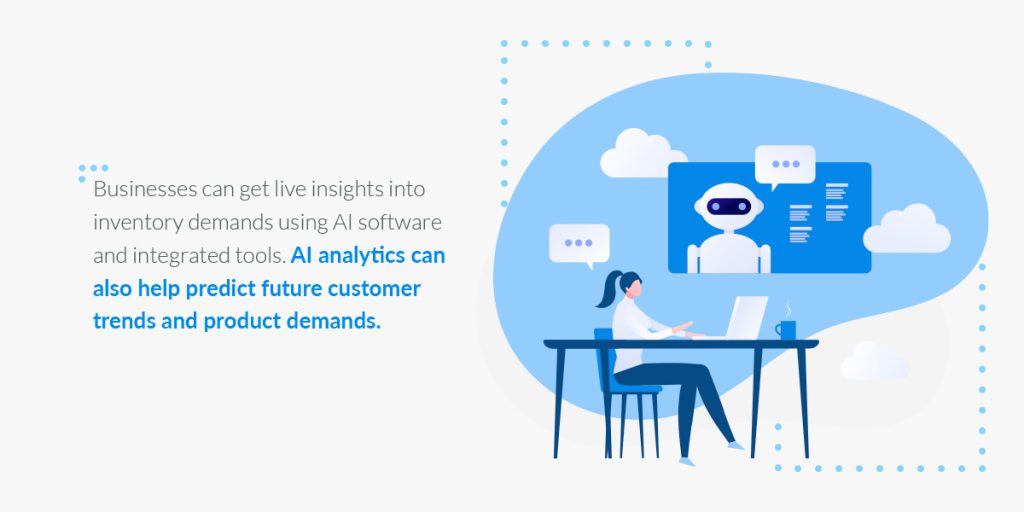
AI and ML can be essential in inventory monitoring and management. Businesses can get live insights into inventory demands using AI software and integrated tools. AI analytics can also help predict future customer trends and product demands, helping companies make more informed and profitable decisions.

Robots and Automated Machines

Using robots for material handling in warehouses can help speed up packing and transporting. Robots and machines can also eliminate time-consuming packing and transporting tasks and enhance picking accuracy.

Process Automation Software

Process automation software digitizes and streamlines payments, onboarding, procurement, order processing, and delivery tasks in supply chains This software helps with decreasing manual tasks, enhancing operational efficiency and cash flow, and improving customer satisfaction.

Data Entry Automation

Instead of capturing and reentering data into a digital spreadsheet, employees can use data entry automation software to scan and extract information from digitally uploaded documents, reducing time-consuming work and human error.

Automate Your Supply Chain With Salient Process

Salient Process provides specialized automation solutions to meet your supply chain needs. Whether you need to streamline your finances, data capture, or workflow processes, we can come in, automate your operations, and set you up for success. Through long-term and prosperous partnerships and advanced software solutions featuring AI and IoT, we can continually expand your automation capabilities, improving efficiency, cash flow, and customer delivery.

Contact us today to start reaping the benefits of automation.

Automate your supply chain

Artificial intelligence (AI) has made massive strides to become a must-have element of e-commerce business processes. Almost three in four businesses already use AI in some capacity, and the e-commerce industry is rife with opportunities for maximizing its effects. You can use AI for tasks like streamlining customer service demands, reducing errors, and making accurate predictions.

How AI Is Reshaping E-commerce

While many businesses are reaping the rewards of AI, e-commerce sellers have a particular advantage. Many tasks in this field are well-suited to AI, which excels in analyzing huge amounts of data, making predictions based on behavior, and understanding speech patterns. An e-commerce business might use AI for everything from providing a customer service chatbot and product recommendations to robust analytics and predictive inventory management. Almost every part of e-commerce sales can benefit from the capabilities of AI.

The different types of AI have wide-reaching impacts on e-commerce:

  • Machine learning: A machine learning system analyzes large data sets to find patterns and trends and classify information. You can use it to identify insights, predict demand, and make complex business decisions. Since online shopping provides so much data about consumer behavior, machine learning is a great fit for e-commerce businesses.
  • Natural language processing: Natural language processing is the technology that rapidly gained popularity through conversational tools like ChatGPT. It uses several other types of AI and allows a computer system to “understand” text and spoken words, including sentiments such as emotions and attitudes associated with the words. In e-commerce, natural language processing creates opportunities such as chatbot customer service, voice assistant interactions, and analysis of customer calls.
  • Deep learning: Deep learning is similar to machine learning but doesn’t require data to be labeled. It can work with more unstructured data, such as images and unprocessed text.
  • Predictive analytics: Predictive analytics uses machine learning technology in a slightly more narrow scope. It focuses on forecasting the future and predicting events, such as sales demand or the likelihood of a customer leaving your company.

These technologies offer a wide range of benefits, such as improved efficiency, better customer experiences, and more informed decision-making. You’ll find businesses using AI in e-commerce for back-end, corporate, and customer-facing applications, where they gain competitive advantages throughout the processes.

Use Cases for AI and Automation in E-Commerce

The future of e-commerce and AI is bright. Here are a few ways businesses are using AI and machine learning in e-commerce:

1. Dynamic Website Content

Machine learning can implement dynamic content on your website that adjusts according to user behaviors. One example might be offering a list of product recommendations. As a user clicks on different items while browsing, AI can learn from their habits and offer suggestions with similar characteristics. Alongside customer interactions, a recommendation algorithm could use aggregate data collected from other users and information provided by the user, such as the shoe size entered in their user profile.

Benefits of dynamic website content

Product recommendations can improve the customer experience while boosting sales. Another way to use AI in e-commerce is through dynamic pricing, which adjusts prices based on market analyses. If supply and demand increase the value of an item, AI can adjust it automatically. It may even consider your competitor’s prices and decide whether lowering your price would be beneficial.

2. Chatbots

Chatbots leverage AI to communicate in a user-friendly manner. Customers can simply type their concerns as they would to a real person and receive responses. AI chatbots can even perform low-level actions for routine processes, freeing human staff members up for more important jobs.

While communicating with customers, an AI model can detect a user’s sentiment, identifying emotions like frustration or impatience. It can change its responses accordingly and flag or escalate the situation to a human agent if needed. AI systems also categorize information from interactions, which helps with tasks like routing the customer to the right department and keeping track of customer satisfaction.

3. Virtual Assistants and Voice Search

The rise of virtual assistants has made making a purchase as easy as alerting your device and saying, “Reorder dog food.” A more specialized example comes from Estée Lauder. The company created a voice-enabled makeup assistant for visually impaired individuals, providing audio feedback on the user’s makeup application through a facial scan.

From straightforward reordering integrations to advanced experiences, e-commerce companies can find unique ways to leverage virtual assistants and voice technology to build their brands and help consumers.

4. Review and Comment Filtering

For large brands, reading every product review or comment would be too resource-intensive. Natural language processing can help by reading through messages and categorizing them by sentiment, product mentions, or specific phrases like “too small.” You can develop a robust understanding of how customers feel about your items, informing further product development and marketing efforts.

An AI model could also reply to reviews, making customers feel heard and appreciated or escalating their concerns where appropriate.

5. Targeted Marketing Campaigns

Since AI excels at analyzing large amounts of data, it can create granular customer segments for highly targeted advertising. Research shows that 71% of customers expect personalized interactions, and 76% get frustrated when they don’t get it. Personalization also supports other advantages, like lower customer acquisition costs and higher marketing return on investment.

By analyzing and making decisions based on customer behaviors, AI can help you create an experience that’s as relevant and helpful as possible at any stage of the buying journey.

6. Automated Processing

AI’s decision-making capabilities are also valuable behind the scenes, taking over repetitive or mundane administrative tasks. Businesses frequently use artificial intelligence in e-commerce to automate processes like returns and fraud prevention. For instance, AI could decide whether to approve a return based on factors like the customer’s location, the reason for the request, and the transaction amount. If approved, it can automatically generate shipping labels, make the changes in your system, and send instructions to the customer.

Many companies combine automated processing with tools like chatbots to offer an extremely fast and convenient customer experience with 24/7 availability and no wait times. Automation also benefits the business by reducing labor requirements for manual tasks, avoiding manual data entry errors, and streamlining order cycles.

7. Sales and Demand Forecasting

Machine learning is a powerful tool for making predictions about expected business activities. You can use it to forecast your expected sales for the season and inform efforts like inventory management and marketing campaigns. If you usually see increases in sales at certain times of the year, such as seasons or holidays, a machine-learning prediction could calculate the expected increase in sales for the upcoming year, allowing you to order more products and bolster your staff.

Forecasting is especially valuable in fulfillment, often helping e-commerce retailers shorten delivery times, minimize waste, avoid stockouts, and optimize costs. AI and machine learning can also help on a smaller scale by making order-level decisions, such as which shipping provider offers the best balance of speed and cost.

See How AI Can Transform Your E-Commerce

Benefits of AI for eCommerce

However you choose to use it, AI has become a necessity for e-commerce businesses looking to get ahead. It’s crucial to gaining competitive advantages in applications spanning the entire order cycle. However, implementation can look drastically different for each organization. That’s why the team at Salient Process takes a comprehensive approach to AI and finds solutions that perform in your unique operating environment.

We’ll work with you to meet e-commerce goals with the help of industry-leading technology from IBM, like IBM Business Automation Workflow and IBM Robotic Process Automation. Contact us today to learn more about our services and see why respected global brands like Google, PayPal, and Adobe turn to Salient Process.

Finance automation

Financial services are crucial for business operations and require a high degree of concern and caution. However, associated tasks can often be time-consuming, and small errors can have significant impacts.

Automation in finance and accounting empowers businesses to redirect their team’s focus while accessing reliable and timely information. Automated processes help teams continue working on initiative-driving strategies by eliminating repetitive, manual tasks and enhancing collaboration.

In this guide, you will learn more about the benefits of finance automation and which processes can be the most beneficial for your business.

What Is Finance Automation?

The goal of automation is to enhance your process efficiencies by eliminating or reducing activities that do not add value. Automated processes require little to no human effort and can be a cheaper and more efficient way to operate. The technology you leverage triggers predefined steps to complete tasks without manual intervention.

Automation in accounting

Automation in accounting involves digitizing every job possible while maintaining high quality and agility. Many companies are relying on financial automation to reduce errors and empower their teams to tackle more challenging and thought-provoking tasks. Machine learning and artificial intelligence can complete repetitive tasks that are often time-consuming for your team while providing more accurate results.

By using these processes, you can redirect finance team efforts to drive strategy and create more value.

Benefits of Financial Process Automation

Automation offers a wide range of benefits for businesses of all sectors and industries. Automated processes are becoming more prevalent across the world because of their ability to empower organizations and improve day-to-day tasks. By leveraging finance process automation, you can:

  • Bring visibility: You can use technology to collect data, providing complete visibility about the moving pieces in your business. You can access information regarding vendors, finance pipelines, invoices, contracts, and more using only one tool rather than performing manual work. By collecting more data, you can make more informed decisions regarding your initiatives and team objectives to spur business growth.
  • Reduce errors: Human error can be a common issue in finance, and artificial intelligence (AI) could save some institutions millions of dollars by reducing errors. Digitizing financial processes can minimize the possibility of data entry errors and the adverse fallback of these mistakes. Tested and reliable processes can consistently handle tasks, so you can rest assured you’re completing essential operations in a timely and accurate manner.
  • Expedite flows: Freeing your team from repetitive tasks allows each person to engage in more critical tasks, empowering your business to complete work faster. Additionally, by reducing errors, your team can save time during review processes and stay consistent while meeting essential deadlines.
  • Boost collaboration: Automated processes make it easy for team members to access, request, track, and create reports. You can create customized solutions to reduce your team’s routine tasks while being more consistent with your messaging and actions. For example, you can use this technology to trigger notifications and emails to keep your team in the know without adding repetitive tasks to their workload.
  • Improve efficiency: You can leverage AI and advanced technology to streamline processes, making operations more efficient. Additionally, you can use this technology to measure the effectiveness of your processes by requesting reports and analytics. This information can help you determine where you need to dedicate more resources and analyze any potential issues.
  • Empower strategic work: Finance teams possess skills beyond crunching numbers, but these tasks can be time-consuming, limiting their ability to tackle more challenging objectives. Automation empowers finance teams to turn data into insights so they can create better strategies, offer more effective solutions, and build stronger relationships. With more opportunities for additional work, your team can find more room for upward mobility while feeling more satisfied with their work.

Which Financial Processes Should You Automate?

When choosing the automation of finance processes, it’s essential to consider which responsibilities require little or no human involvement. Some processes may seem complex, but automation can quickly aid your team in finding more efficient solutions. Below, you can find various tasks you can automate to empower your team and streamline operations.

Accounts Receivable

Your team must know how much money your customers owe your business if you provide services or goods. You can automate accounts receivable tasks such as recurring invoices, recurring credit card payments, and overdue payment reminders so you can receive your owed amounts on a more consistent schedule.

Automation software can send your customers automatic invoices you generate on a determined schedule. This strategy can give customers better visibility of their requests and services so you can receive more timely payments. For customers who miss a payment date, you can send automated reminders to direct them to payment options. These automated messages can prompt your customers to complete payments they may have forgotten about without requiring you to reach out directly or wait weeks or months for the correct payment amount. 

You can also use automation to automatically process customer credit cards on a predictable schedule. These auto-pay options offer easy solutions for customers and businesses, as they eliminate the need for manual reminders or actions. You can further leverage automated messages to encourage your audience to access a self-service portal or pay online to expedite the payment process while eliminating the need to input data or customer information.

Accounts Payable

Paying your debts on time is crucial for maintaining strong relationships with vendors and appearing as a reliable business to potential partners and customers. Neglecting owed debts can cause late payments, missed discounts, strained relationships, and late fees that harm your business.

Accounts payable

Automation offers a simple solution for reducing these adverse outcomes by setting recurring payments. You can select the date and amount you need to pay and let your tools do the rest. You can also set up payment reminders if you have different expenses each pay period to ensure you stay on schedule.

You can automate invoice capture, approval, coding, and payment to maintain strong relationships and provide an accurate view of your company finances and budget. You can also leverage additional planning tools to allocate the appropriate budget automatically before invoices reach accounts payable.

Purchase Order Solutions

Businesses often face problems with purchasing requests due to incomplete, missing, or incorrect information. A lack of spending control can cause impromptu orders that do not adhere to complete procurement processes. Inaccurate or incomplete data can disrupt your processes, whether a result of manual entry errors, unstructured forms, or receiving requests across various channels.

Finance automation makes it easy to avoid these issues by offering streamlined processes for payment reconciliation, procurement tasks, and spending to facilitate order management. Your team can forego spreadsheets and orders while ensuring they have all the information necessary to complete objectives. You can use automation to standardize request creation, set mandatory actions, outline purchasing conditions, and establish rules to prevent errors while maintaining compliance when processing requests.

Payroll

Running a payroll can be a daunting responsibility. Processing information such as possible deductions, overtime wages, hourly compensation, and multiple tax codes takes time, especially if you have hundreds or thousands of employees.

Thankfully, you can digitize many steps in this process, such as adding employees and their banking data to one system, setting different hourly rates or salaries, and dedicating payment dates for automatic processing. Advanced tools also make it easy to store important documents, such as new hire information and tax declarations. Employees can view upcoming paychecks and manage data, such as if their marital status has changed or they’ve moved to a new address.

Reporting and Analysis

You can automate financial reporting to access vital insights for informed decision-making. The more reports you run, the faster you can collect essential data to drive strategy and identify weak spots.

You can deliver reports to staff members and include multiple reports in one email for efficient collaboration. Dashboards can collect information like account status, expenses, conversions, department performance, and more. After deciding which reports you want, you can also create a predetermined schedule to receive reports at the same time every day, week, or month for consistency.

Tax Solutions

You can leverage multiple types of technology to make it easier to scan documents and reduce physical paperwork. Advanced tools can extract data from documents, including bills, receipts, invoices, inspection reports, and packing slips, so you can skip manual data entry processes. This format also makes it easy to stay organized, so you can easily access and view your essential documents when tax season rolls around.

Expense Reimbursement

Reimbursement requests can be straightforward but quickly find a place in the backlog where many people submit requests across various channels. Challenges with reimbursement often include employees requesting incorrect amounts due to unclear expense policies, delayed reimbursements due to missing information or late filing, and poor visibility from a lack of integration with various systems.

Finance automation can address these issues by providing a structure for each reimbursement request. You can use automation to provide clear information regarding travel costs and similar expenses, allow employees to monitor their request status, send notifications to approvers, and ensure each request undergoes the same process to create a more organized and efficient process. You can also integrate other technology to capture data regarding historical expense trends so you can determine where common challenges exist.

Common Challenges and Solutions for Automation

All technology exhibits benefits and challenges. As many businesses embrace AI and advanced technology to automate processes, several problems can arise. It’s important to understand the risks you may face before implementing a new solution so you can take the appropriate actions to minimize adverse outcomes and create a smooth transition to your automated processes.

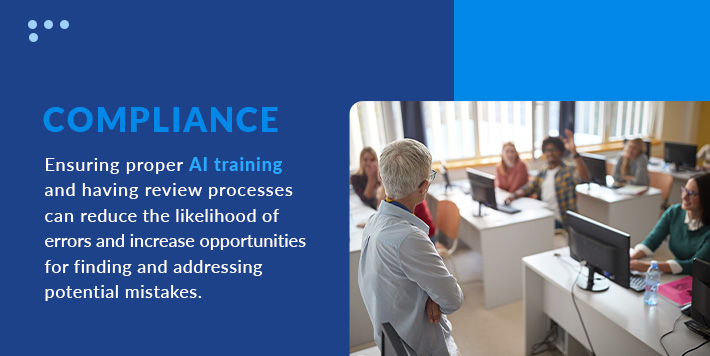
  • Compliance: Some businesses could face compliance challenges if automation errors impact the accuracy of reports. Ensuring proper AI training and having review processes can reduce the likelihood of errors and increase opportunities for finding and addressing potential mistakes.
Finance automation can ensure compliance
  • Technology: Some IT maintenance and updates can impact technology, causing periods of downtime or requiring manual processes until you address the issue. You could schedule maintenance at low-traffic hours or set specific maintenance schedules so employees can anticipate changes with minimal disruption.
  • Talent: Employees may view their lessened workload as a negative action, believing robots are taking their responsibilities and replacing their talent. You can combat this assumption by having discussions with your team and assigning high-level tasks to reinforce that employees are not at risk of losing their jobs.
  • Reporting: Along with failing to meet compliance, inaccurate reports can lead to poor decisions based on inaccurate data. Businesses must correctly set up automation to prevent reporting issues from occurring.
  • Operations: If your processes feature a poor design, you could slow operations rather than make them more efficient. Lacking oversight can lead to inefficiencies that require more time to address the problem than the initial manual process would have required. Companies should implement a management team, strong internal controls, and well-built bots to streamline operations with proper automation.

Technologies for Automation in Finance

There are many automation services you can use to streamline your processes. At Salient Process, you can find capabilities, including process discovery and mining, seamless integrations, business process management, low-code application platforms, and more. We empower businesses with comprehensive solutions, including:

  • Process Discovery: Process Discovery empowers companies to document, identify, and understand how their teams accomplish each business process. This solution allows you to uncover steps you may not have known about and realize deviations. Process Discovery insights make it easy to determine the best areas for improvement to better align your processes with business goals. 
  • Robotic Process Automation Services (RPA): RPA automates manual, mundane, and repeatable tasks to give more time back to your team. This solution is one of the most common Digital Business Automation capabilities because it automates front- and back-end actions. RPA bots imitate human actions, seamlessly integrate with current infrastructure, and are highly customizable, making them an ideal solution for a variety of tasks.
  • Workflow: Our Workflow solution features end-to-end automation that empowers teams to engage in higher-level tasks while reducing errors. This solution can handle interconnected tasks by automating the entire business process. Workflow can help institutions decrease coaching times, streamline request processing, eliminate manual reporting, improve communication, identify cost reductions, and more.
  • Data Capture: Data Capture uses machine learning technology, text analytics, and natural language processing. This technology classifies, extracts, and identifies data from electronic and paper documents so you can easily process it. This solution is ideal for high-volume and repetitive tasks where you know what data you need to extract.

Embrace Automation With Salient Process

Finance automation solutions

Embracing automation can bring many benefits to your business. When you’re ready to leverage new technologies and advanced solutions, you can rely on the team at Salient Process to guide you.

Salient Process is a global leader in aligning enterprise goals and processes. Our cutting-edge Digital Business Automation solutions enhance workflow and generate the maximum ROI. Partnering with us allows you to access top-tier automation services, expert training, and comprehensive workshops to empower your company to excel.

Talk with us today to learn more about our services and how we can help your business drive success.

What is compliance automation?

Compliance automation is an innovative way to comply with regulations while saving time and money. Technological solutions make it possible to automate compliance processes, freeing employees to focus on other tasks that improve their companies and boost revenue. Quality automation software can help your company keep pace with the latest regulations in your industry so you can focus on driving your business forward.

Compliance Automation Defined

Compliance automation uses advanced technology such as artificial intelligence (AI) and machine learning (ML) to improve and accelerate the compliance process. It’s a process that simplifies compliance-related procedures and tasks such as risk mitigation strategy, internal gap analysis, and policy rollout.

Importance of Regulatory Compliance Automation

Automated compliance is essential because it helps companies secure their data, resources, and clients while saving time and money. Experts predict that companies can reduce expenses by 30% when they implement automated processes.

Completing compliance processes and tasks manually is challenging and time-consuming due to security risks, frequently changing regulations, and budget constraints. Advanced technology makes compliance processes easier and faster, offering the following advantages for your company.

1. Greater Efficiency and Productivity

Since compliance automation accelerates processes and saves time, it frees your employees to focus on higher-value tasks and responsibilities. When you use dependable software to handle your compliance needs, your employees have more time for other actions, such as generating new ideas, collaborating on projects, evaluating client needs, and finding new ways to increase revenue.

2. Protection From Repercussions

Automating your compliance processes can help your company avoid repercussions. Compliance is one of the most important parts of operating a company because it ensures you conduct legal business practices.

Handling compliance procedures manually presents a human error risk, and a small error can result in a regulatory body finding your company non-compliant. Compliance automation software uses advanced technology to track and manage your company’s data, procedures, risk management, and activities to ensure you follow the latest regulations.

Using reliable compliance automation software can also help you secure business deals. When you remain compliant with regulations, partnering companies are more likely to find your company trustworthy and want to work with you.

3. Helpful Insights for Improvement

Compliance automation software provides detailed assessments, enabling companies to proactively report their compliance status. With automated, reliable, and consistent reporting, your company can identify and address potential complications before they cause issues.

Automation helps with reliable reporting

How Does Compliance Automation Work?

Compliance automation works by unifying compliance tasks and procedures in a centralized interface. It uses AI, ML, and advanced analytics to scan your infrastructure and systems. With this automatic scanning, you can quickly and easily identify compliance vulnerabilities, gaps, and areas for improvement.

Compliance automation software checks and monitors your systems and activity to ensure they adhere to your company’s policies and industry regulations. Quality software solutions also have built-in remediation features to help you resolve security issues easily. With the right compliance automation software, you can ensure you have the right security measures in place, receive notifications about sensitive data, and take corrective action when necessary.

Compliance Automation Examples

Consider the following compliance workflow capabilities your company can take advantage of with compliance automation solutions:

Regulatory and Corporate Compliances

Compliance automation software tracks your systems to ensure your information, data, and processes are compliant with regulations and your corporation’s policies. You can set predefined standards, and the software constantly monitors your systems for any discrepancies. For example, you can enforce mandated policies on your company’s devices and toggle a switch to prevent individuals from making any modifications that would go against company policy.

Security and Risk Management

Automation in risk management can continuously monitor predetermined risk indicators and send you real-time alerts when the software detects potential risks within a system. It tracks trends and generates reports to help you pinpoint precisely where you need to increase security. Automating your compliance processes and procedures can significantly improve your decision-making.

Compliance automation can make your employee onboarding and offboarding processes more secure. For example, specialized software can automatically grant new employees access to company resources and revoke their access as soon as they leave the company. Automation software can also restrict access to certain systems until employees meet predefined requirements.

Another advantage of compliance automation software is the ability to set password criteria and password update requirements to protect your employees and company data.

Audit Trail Management

Automating your compliance processes also improves your company’s financial reporting. Innovative software uses AI and ML technology to update, store, track, and protect financial statements. Automation organizes and manages your company’s financial activity, helping you identify discrepancies, remain within your budget, and simplify and accelerate the auditing process. Auditors can analyze your records much easier when you have organized, accurate financial statements in one place.

Self-Assessment

You can significantly improve your self-assessment processes with compliance automation software. AI and ML technology allow you to automate assessment processes such as testing, controls analysis, and corrective action planning. For example, automating controls analysis and testing establishes a consistent testing framework. This framework makes testing more accurate and effective for a smoother auditing process.

Industries Embracing Compliance Automation

Compliance automation is advantageous across a wide range of companies and organizations. Consider how compliance automation software benefits the following industries:

  • Healthcare: Companies in the healthcare industry must comply with Health Insurance Portability and Accountability Act (HIPAA) regulations to protect patient privacy. HIPAA regulations change frequently, and compliance automation software makes it easy for companies to receive notifications and updates to prevent non-compliance.
  • Finance: Financial institutions can use compliance automation to identify clients, detect fraud, and protect personally identifiable financial information (PIFI) quickly and securely. Advanced software performs these functions properly so companies in the finance industry can comply with state, local, and federal government regulations.
  • Information technology: Information technology (IT) companies must comply with various regulations to ensure they protect data properly. Compliance automation helps IT departments secure data and information effectively, and it notifies employees of the latest data protection requirements to ensure systems remain in compliance.

Choose Salient Process for Automated Compliance Solutions

Compliance automation solutions

Compliance automation improves and accelerates compliance procedures to ensure your company meets regulations. With the right software, you can prevent non-compliance while freeing your employees to focus on other important tasks that contribute to your company’s growth and bring in more revenue.

At Salient Process, we offer Digital Business Automation solutions to make compliance faster, easier, and more secure. We can help your organization automate your compliance processes for a reliable system that drives your business forward. Contact us to learn more about automating your compliance processes.

benefits of project management automation

Automation in project management can help your teams significantly boost productivity, efficiency, morale, communication, and return on investment (ROI). When you allow innovative, dependable software to handle your organization’s most time-consuming, repetitive tasks, your project managers have time to focus on higher-value team objectives that move your company forward.

What Is Project Management Automation?

Project management automation uses specialized software to computerize specific project management tasks. Innovative software uses natural language processing, artificial intelligence and machine learning technology to automatically complete repetitive, manual tasks. It consists of a series of ongoing procedures based on business strategies.

Teams can use project management automation functions such as updating, planning, or reporting to complete various tasks. You can adapt and apply different functions to various projects within your organization because basic functions and processes often share an identical or similar business goal.

When to Use Automation in Project Management

Project management automation is an excellent solution when your teams experience low productivity or find it challenging to meet deadlines. You should consider project management automation if your company wants to:

  • Meet more deadlines effectively.
  • Create reports faster.
  • Minimize time spent on meetings.
  • Reduce or eliminate project delays.
  • Spend less time sending team notifications or following up with your company’s stakeholders.
  • Use resources correctly and efficiently.

How to Automate Project Management

You can automate your project management tasks effectively when you understand what automation software can help you do. With the right automation solutions, you can complete the following tasks much more efficiently.

  • Display data and reports: Setting up automated dashboards allows your company to share crucial information with stakeholders. You can customize dashboards and specify which information is visible to certain individuals so they can access the information whenever needed.
  • Track project progress: Automated dashboards also help your teams track each project’s progress. With clear, organized project reports, your team can identify and address challenges or setbacks in real time.
  • Send notifications and reminders: Project management automation software automatically sends reminders and notifications to the appropriate recipients when your team or an individual employee meets a specific criterion. You can set notifications and reminders to send for various reasons, such as when project completion dates approach or when someone adds or changes information on spreadsheets. You can also send additional notifications when urgent matters arise.
  • Requesting and receiving approvals: Automation software can help you streamline your company’s approval process. Whether stakeholders need to approve initial designs or completed documents, automating this process helps you keep everything in one place for easy viewing and updates.
  • Assign projects and tasks: Automation software can help your teams easily receive incoming requests and assign them to specific team members quickly. For example, automation software can automatically assign a new task as soon as an employee marks a previous task as complete.
  • Organize and complete onboarding processes: Project management automation software can help you complete onboarding paperwork and communicate with incoming employees quickly and easily.
  • Update and track team budgets: Automation software can also update team budgets automatically, making it easy to track expenses and communicate with team members about available resources.

If you’re wondering where you should start and which processes you should automate first, it’s important to evaluate your company’s current workflow. Which processes consume the most of your employees’ time? Which processes are basic and easy to automate with minimal human intervention and oversight? Once you identify the best tasks and processes to automate, you can integrate automation software into your system and help your teams utilize them effectively.

Advantages of Project Management Automation

Project management automation can drive your company forward and help you compete with other organizations in your industry. Consider the following advantages of automating your project management tasks and processes:

Productivity and Efficiency

project management automation boosts productivity

You can significantly boost productivity and efficiency with the right automation tools. Project management automation completes your company’s most repetitive, time-consuming tasks quickly so your employees have more time and energy for other responsibilities. It’s an excellent solution if many of your company’s employees spend ample time on low-value tasks.

Automation solutions take care of repetitive processes, leaving project managers and team members with more time to complete valuable tasks such as brainstorming new ideas, testing new products, and working on innovative marketing techniques.

Increased Scalability

Many companies are able to scale their business after adopting and utilizing project management automation software. As automation software helps you manage tasks, your team can dedicate more time to growing the business, improving products and services, and expanding your organization’s reach.

Reduced Human Error

Automating project management tasks also helps reduce human error, ensuring your data, reports, and schedules are accurate and reliable. Individuals can make mistakes when entering data, completing research, or creating reports.

Employees may make more mistakes when tired or distracted, especially when they work on mundane or repetitive tasks. Automating these processes allows advanced technology to deliver 100% accuracy because automation software stores and retrieves information securely.

Greater ROI

Since project management automation increases productivity and efficiency, it can help your company save money. As your employees spend less time on repetitive tasks and more time on higher-value processes, you can improve your business offerings, increase brand awareness, and bring in more revenue. After automating project management tasks, many companies increase their ROI.

Greater Visibility for Stakeholders

Project management automation makes your company’s processes and project statuses more visible to stakeholders. With the right automation solutions, you can provide more consistent updates for stakeholders so they remain informed throughout the year. This level of communication increases stakeholders’ confidence in your company’s capabilities and dependability.

Employee Morale

Employees typically complete higher-quality work when they work on tasks they find purposeful. Automating tasks such as scheduling and data input gives your project managers more time to work on fulfilling tasks. Whether they plan new ways to interact with their teams or collaborate on creative ideas, giving your employees more time for the work they are passionate about can boost morale.

Automate Project Management Tasks With Salient Process

automate project management

Project management automation requires high-quality software to ensure accurate results and smooth processes.

You can boost your company’s productivity, drive your business forward and increase your ROI with high-quality project management automation software. Salient Process offers Digital Business Automation solutions to help you free your employees of repetitive processes and give them more time and energy for high-value tasks.

We can help you identify where your teams can benefit from automation the most, and our experts can install the software you need to reach your goals. Contact us to learn more about our solutions and how we can help you automate your project management processes.

business processes every company should automate

With the technology available today, businesses can no longer ignore the cost of manual processes. According to a study, businesses can lose up to $1.3 million annually on manual, paper-based workflows. These tedious, repetitive tasks can hinder your business’s ability to align processes and goals. As a process analyst, operational excellence, or intelligent automation leader, you’re likely always looking to evolve alongside your industry peers.

If you want to chart a seamless course to a thriving business, the first step is to enhance your workflows and increase efficiency. By automating your key organizational processes, you can save time, stay agile, and boost productivity. High-performing solutions help your organization operate optimally and address inefficiencies so you can focus on your bottom line.

What Are the Benefits of Automating Business Processes?

In an increasingly fast-paced world of digital advancement, automating your business processes can help you stay competitive and keep up with the industry. From your executives to employees to customers, automation technologies help drive business success.

Salesforce reports that over 90% of employees agree that automated solutions increase productivity, while 85% agree that they boost collaboration. Finally, almost 90% of workers said they believe automated solutions enable them to get more done and make faster decisions.

With more time on their hands, employees can prioritize other high-value tasks, such as building positive customer relationships. When your teams can focus on providing excellent customer service that reinforces your brand’s values, you can more easily establish yourself as a reputable business.

Reducing your staff’s workload with automation can also promote a culture of work-life balance and fulfillment. Because using automation minimizes errors and labor, your business can benefit from cost savings.

5 Key Business Processes That Can Be Automated

The advantages mentioned above are just a scratch on the surface of what automation can do for your business. Let’s dive into the specific ways automation can empower your company to evolve and excel.

1. Sales

Your sales team is responsible for identifying, communicating with, understanding, and providing solutions to customers. If you’re still relying on manual processes for acquiring leads, you could be wasting valuable time and missing opportunities for success. Toggling between emails, spreadsheets, and lagging legacy systems may be hindering the effectiveness of your sales tasks.

Sales automation eliminates the need to perform many repetitive and time-consuming tasks. You can streamline lead qualification, prospecting, follow-ups, and quoting to maximize your sales workflow. Automation enables your sales team to focus more on finding new customers, strengthening communication, and launching marketing campaigns.

2. Customer Service

Benefits of automated data capture

It’s no secret that the customer experience is an essential aspect of brand loyalty and business growth. Prompt service, minimized waiting time, and quality interactions are critical elements that can make or break a customer’s perception of your business. When they’re in need of assistance, customers expect you to resolve their issues with immediate attention. 

Negative business experiences and reviews can have a poor financial impact on your company and affect future sales. One study indicates that negative reviews hold more weight for consumers than positive ones, potentially impacting who they will give business to.

By automating customer service capabilities, your customers can receive enhanced communication, personalization, and convenience. For instance, many brands today use chatbots to provide fast and concise answers to common consumer questions. Automation gives your customers the help they need without making them wait in long queues. Likewise, your customer service representatives can prioritize communication with customers who have complex issues and concerns.

3. Human Resource Processes

Your human resources (HR) department is responsible for many onboarding and offboarding tasks. A survey found that only about 50% of new employees report a satisfactory onboarding experience, while 32% find it confusing and 22% find it disorganized. If your HR teams rely on manual, inefficient processes, it can frustrate everyone involved.

Your business ends up wasting time and losing handpicked talent. Rather than repeating the same tasks over and over with each new hire, your HR team can benefit from automation that streamlines the entire process from recruitment to offboarding. For example, automation may help with:

  • Resume screening
  • Follow-up emails
  • Employee information forms
  • New hire paperwork
  • Mentor assignments
  • Assigning equipment
  • Account creation
  • Exit interviews
  • Providing references
  • Handover management 
  • Tracking employee hours
  • Payroll processing

Automation in your HR department can also help cut labor costs and create a swift onboarding process that boosts employee retention. 

4. Expense Tracking

Your expense approvals workflow can often be a complex, multi-layer process. Tracking your expenses manually is both time-consuming and inefficient. Many sales teams have specific or multiple conditions for approval, creating a lengthy process. Automating your expense tracking workflow can speed up your approvals and minimize delays across your departmental budgets.

Software solutions that help you monitor and analyze expenses can reduce the risk of human error and produce cost-saving opportunities. Automated expense tracking enables your business to take a more proactive approach than manual expense reporting. Real-time visibility into your expenses makes it easy to see exactly how employees are spending and reimbursing them efficiently.

5. Social Media and Digital Marketing

The global marketing automation industry revenue grew by over 20% between 2021 and 2023 to nearly $5.9 billion. Nowadays, with so much content spread through social media channels and online campaigns, businesses can no longer keep up with the increasing number of competitors who use automation. Whether you’re planning email marketing campaigns or want to schedule posts ahead of time, automation in marketing makes it possible to coordinate these activities across multiple channels.

Though your marketing teams have unique talent and ideas for showcasing your company’s values and products, managing separate social media accounts can take up valuable time. Using automation platforms means your teams can boost engagement and more effectively strategize content schedules. Digital marketing and social media automation can also free up your employee’s time so they can focus on creating more substantive content for promoting your brand.

Discover the Power of Workflow Automation With Salient Process

Manual tasks can hold your business back from reaching new goals. By harnessing the powers of automation, you can save valuable time, money, and effort. With improved efficiency, your teams can prioritize more high-value tasks that take your business to the next level.

Salient Process is ready to help you maximize your workflow with generative AI and automation technology. Our solutions and products are designed to transform how your business operates, from automating time-consuming processes to enhancing workflow management.

As an IBM Premier Business Partner and a leader in Digital Business Automation, we’re here to craft an automated solution tailored to your business’s unique needs. Are you ready to learn more about the power of automating your business processes? Contact us today to speak with one of our experts.

Workflow automation benefits