
Saving Millions by Avoiding Compliance Penalties with Acia Stankova at PPD


During Opex, Host Jimmy A. Hewitt had the amazing opportunity to sit down with Acia Stankova, Manager of Business Transformation at PPD, a Thermo Fisher Scientific Company. Acia and her team focus their efforts on increasing customer satisfaction for external customers and internal customers through process improvement and automation. Tune in to hear Acias story, the amount of tangible business value that is tied to employee satisfaction, and more!

Watch Episode 16 interview now!

Follow along with the episode now!

GUEST BACKGROUND: Acia Stankova, Business Transformation Lead at PPD, a Thermo Fisher Company

Experience in the world of process improvement

Her team focuses on increasing customer satisfaction for internal and external customers through process improvement and automation

Her team ties business value to employee satisfaction


Been at the company for ~5 years

Previous experience was in laboratories as a medical technologist

Started developing her skills in performance optimization and business transformation

Wanted to change the world in our professional settings

  • Laboratories
  • Other business units

Has theoretical and practical knowledge

Thermo Fisher Scientific Corporation: American supplier of scientific instrumentation, reagents and consumables, and software services

  • 130,000+ employees
  • PPD (Pharmaceutical Product Development): global central laboratory
    • Global contract research organization (CRO) providing comprehensive, integrated drug development, laboratory, and lifecycle management services
    • ~800 employees
    • Business unit that Acia works for to transform
    • Also collaborates with all other business transformation leaders, managers, and directors

Business Transformation:

Business Transformation definitions:

  • Host (Jimmy Hewitt) Definition:
    • 5 pillars of business transformation includes:
      • Hyperautomation
      • Business Strategy
      • Industrial Engineering
      • Software Engineering
      • and Change Management
  • Guest (Acia Stankova) Definition Involves:
    • Change Management
    • Strategic Transformation
    • Market Share Transformation
    • and Mindset Transformation
    • Mindset Transformation: not from the point of Change Management, but from the point that you want people to get involved on their own
      • You should not give someone a vision; you should wait for people to develop their own vision and merge with the corporate vision
      • Forms a new place for them to grow and see how they can develop
      • Much more likely to work towards creating a proper vision as opposed to telling someone what the vision is
    • Vision Example:
      • Corporate Vision: need a better way to present information to clients without traveling
        • Improve client experience and .Improve communication with client
      • Team vision: Acia encouraged brainstorming, creativity, and imagination for solutions. No restrictions on how to do it
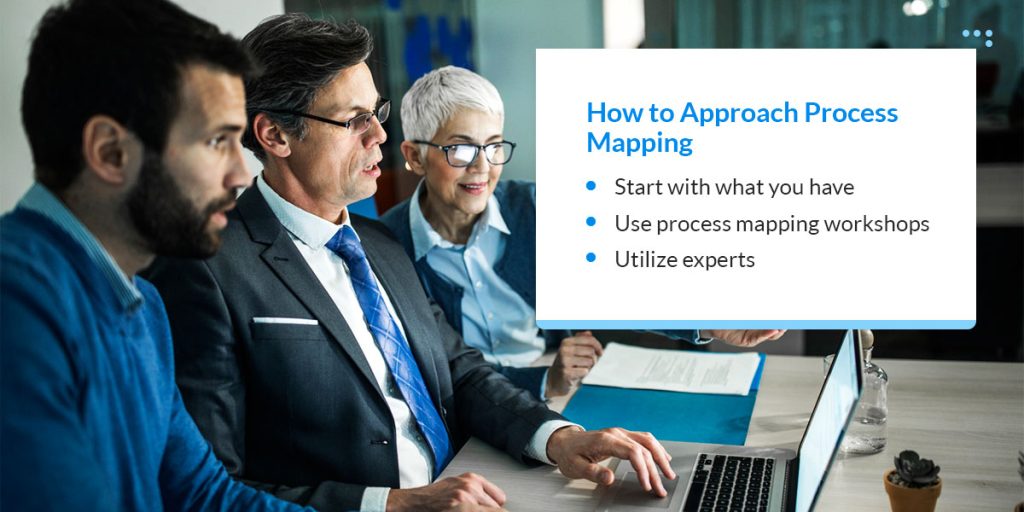
        • Individual on Acia’s team brought up process mapping with additional elements
          • Visual Components
          • PowerPoint template
          • Characters
        • Continuous improvement using feedback from clients to establish a final product
PPD Business Transformation:


2. 5 years old

  • 30-40% of business: improving the client experience and the communication with clients
  • 60-70% of business: internal processes
    • Internal projects with internal clients
    • Stakeholders with different business transformation units
    • One-on-one work with each laboratory to ensure success
    •  
  • Employee satisfaction
    • Speak directly to employees
    • Become a bridge between employee and manager
    • Employees have the answers
  • Map current and future employee processes and bring the results to leadership
    • Map processes and identify opportunities to improve

Business Transformation Process:

  • Someone submits a request to Acia’s team
  • Exploratory forms are filled out to uncover details
    • 20-question template
    • Example question topics: Current state, future state, what is going to change, what will be accomplished for stakeholders, will it save time, will it save money, where is the pain, yhy is there pain, etc. Not just about money!
    • One-on-one meetings:
      • Questions are sent ahead of time so provoke thought but then the team sits one-on-one with client to answer all the questions
      • The first initial meeting it the most important part of the process
    • Priority: The first 5 questions result in what order the requests are taken
      • Some circumstantial discretion is involved
      • Resources are limited
      • Can only do one project at a time
      • Profitability, impact, size, time, money, etc. are considered
      • Expertise in the industry is involved in the decision-making process
    • Give leadership final report of the whole improvement
      • Quantify what they saved by measuring the before and after
Use case:

Challenge:

  • Process: Form completion and submission to document and investigate events
    • Took 2 hours to complete
    • New employees were not experienced, which led to human error
    • 80-90% of time errors were found in the process
  • Business was not complying with some of the federal agents that certified the company due to incorrect data
    • Business could be shut down
    • Paid fees to government agencies for having incorrect data
    • 140 events a year, each costing $2-3,000
  • Backlog of non-compliant case findings from 2016 that were never closed

Solution:

  • Start with the key members and defined the entire process
    • Supervisor and subject matter experts
  • Simplified the process
  • Made it more automatic
    • SharePoint
    • Auto-populated fields

Outcome:

  • Errors found only 10-15% of the time, compared to 80-90%
  • Process takes 30 minutes instead of 2 hours
  • Huge improvement
  • Closed all outstanding case findings from 2016 till current day in one year
  • Current on all processes
  • Simplified the overall process
  • Saved millions of dollars in fees to government for incorrect data
  • “[Employees] have the answers. They just maybe don’t have the way of presenting it. So, we sit, we map what we have, we show the difference in what [the employees] want to do, and we run it by the leadership and [hear] ‘Mmm that’s a great idea.’ It’s the small things…We do the small things. We make the little guys happy, and when they’re happy, they do their best. They give their 200%….and we all win.”- Acia Stankova
 
WATCH EPISODE 16 INTERVIEW WITH Acia Stankova NOW
 
 
ARE THERE MORE EPISODES?

YES! Bots & Thoughts is officially on all podcast streaming platforms. Check it out now!

👉https://www.salientprocess.fm/

HAVE A TOPIC IDEA? LET US KNOW!

We would love to hear from you. This podcast is for you, and if you have something that you want to hear, we would love to know. This form is also a place for you to ask questions or get in touch with our Salient Process team. 

Submit a request for a podcast topic here❗

 

👉Subscribe to Bots & Thoughts: The Hyperautomation Podcast

👉Subscribe to our Spotify Here

👉Subscribe to our Apple Podcast

👉Subscribe to our Google Podcast Here


⏩Subscribe to Salient’s Monthly Newsletter Here 

🎤Be our next guest! Sign up Here

📲Contact our Podcast Host Here 

 

  ⏩LinkedIn

👉 Follow Bots & Thoughts on Here

👉 Follow Salient Process Here

👉 Follow our Podcast Host Here

  ⏩Youtube 

  ⏩Twitter 

🌐Learn more at Salient Process


Related Content


More on Hyperautomation:

Hyperautomation Home Page

What is Hyperautomation?

Scaling Beyond RPA to Hyperautomation

North Star Methodology

More on Salient Process:

Salient Process Home Page

Bots & Thoughts: The Hyperautomation Podcast

Salient Process is a full-service digital business automation shop and proud IBM Automation business partner. To learn more about us at our website, request a free consultation with one of our expert automation advisors! We look forward to guiding you and your company along your own unique Hyperautomation journey.

Establishing Effective Continuous Improvement Projects with Ryan Roberts, VP of Continuous Improvement at Air Methods


We are excited to release the first of many In-person interview episodes filmed at OPEX, the 6th World Annual Operational Excellence & Business Transformation Summit in Orlando, Florida, last week!

During Opex, Host Jimmy A. Hewitt had the amazing opportunity to sit down with Ryan Roberts, VP of Continuous Improvement at Air Methods, to discuss establishing effective Continuous Improvement projects within organizations. Tune in to hear Ryan’s story on how he got into the continuous improvement space, how process improvement fits in the world of health care, and more!

Watch Episode 15 interview now!

Follow along with the episode now!

Guest Background: Ryan Roberts, Vice President of Continuous Improvement at Air Methods


Air Methods: Air Medical transport

Medical helicopters

A lot of deep, clinical trauma expertise

Roberts Mindset: ask “How do we do this better?” every morning

You are either born with the mindset or can learn (through teaching, coaching, and development) the mindset

Education: Industrial engineering

Black Belt Six Sigma Certification


Prior Career:

  • Began in manufacturing
  • Moved into healthcare
  • Been in healthcare for 15 years
  • Roles:
    • Billing Center
    • Certified change manager
    • Certified Train the Trainer
    • Been at Air Methods for 5 years

Current: Vice President of Continuous Improvement at Air Methods


Attained the role because Roberts knew how to communicate with people, collaborate, be flexible, adapt

Understood both Lean Six Sigma AND change management

Assisting operations with the Billing Center continuous improvements currently Process mapping

Holding workshops to dig into front-end processes and understand where Air Methods can automate to make processes better

Wanting to use the people they have. Not more people, not less people. It is not black and white

People can agilely move to positions that are better suited for themselves and the processes

Continuous improvement:

Mindset: Operational Excellence, Continuous Improvement, Lean Six Sigma, etc. is a mindset, not just list of tools, methodologies, or processes. It is how you go about your everyday life


“How do I make this process better?”

End result: improves your life and job


Resistance:

Need a willing subject, executive support, leadership alignment

A “First Who, then What” space:

  • Who: need a mix of different people to make your team successful and make effective improvements
    • Cannot have all the same people
    • Need diversity in thought processes and collaboration
Roberts’ Previous employer: University Medical Center

Assignment: Ambulatory, outpatient clinics (Oncology, Orthopedics, Allergy, Primary Care, etc.)


Task: improve patient experience. Meet KPIs

Satisfaction score

Wait time

Clinical outcomes

Approach:

  • Have to involve the people
  • Have every person and employee in each clinic carve out a day to workshop the process, get ideas, look at current processes, highlight challenges, and more to understand everything involved
  • Created an action plan to execute

Challenges:

  • Received pushback: money, time, effort, closing clinics, etc.

Success:

  • Started with one guinea pig who said yes. Went through every clinic and executed the plan

Key Themes:

  • Simple communication
  • Visual metrics
  • Innovation team: Think tank tasked to create anything
    • Created a digital real-time map of the clinic that showed wait times (flashed red if a patient was in room too long) in every clinician’s room and nursing station

Concepts:

  • Visual management: Lean Six Sigma
  • Workflow management
  • Digital

Takeaway:

  • Pilot can be helpful to feel benefit before implementing widespread
  • Operational excellence: you do not have to have one large transformational effort
Overview: view from Roberts
  • Future expectations:

    • Manual data entry is eliminated for billing processes
    • Repurpose human capital to higher value, more strategic collaboration, partnering tasks
    • Employees enjoy their jobs more
    • More Six Sigma Black Belts
    • More Continuous Improvement projects
      • Employees look at data, analytics, and reports and take on continuous improvement tasks themselves
    • Remember: Continuous improvement is a mindset

Watch Episode 15 Interview with ryan roberts Now

are there more episodes?

YES! Bots & Thoughts is officially on all podcast streaming platforms. Check it out now!

https://www.salientprocess.fm/

Have a topic idea? Let us know!

We would love to hear from you. This podcast is for you, and if you have something that you want to hear, we would love to know. This form is also a place for you to ask questions or get in touch with our Salient Process team. 

Submit a request for a podcast topic here❗

👉Subscribe to Bots & Thoughts: The Hyperautomation Podcast

👉Subscribe to our Spotify Here

👉Subscribe to our Apple Podcast

👉Subscribe to our Google Podcast Here


⏩Subscribe to Salient’s Monthly Newsletter Here 

🎤Be our next guest! Sign up Here

📲Contact our Podcast Host Here 


  ⏩LinkedIn

👉 Follow Bots & Thoughts on Here

👉 Follow Salient Process Here

👉 Follow our Podcast Host Here

  ⏩Youtube 

  ⏩Twitter 

🌐Learn more at Salient Process


RELATED CONTENT


More on Hyperautomation:

Hyperautomation Home Page

What is Hyperautomation?

Scaling Beyond RPA to Hyperautomation

North Star Methodology

More on Salient Process:

Salient Process Home Page

Bots & Thoughts: The Hyperautomation Podcast

Salient Process is a full-service digital business automation shop and proud IBM Automation business partner. To learn more about us at our website, request a free consultation with one of our expert automation advisors! We look forward to guiding you and your company along your own unique Hyperautomation journey.

Enterprise Process Improvement ft. Special Guest Dr. Kristie Collins


On this episode of Bots & Thoughts, our host, Jimmy A. Hewitt, sits down with Dr. Kristie Collins, Former Sr. Process Engineer at Edelman, to discuss why process improvement is essential to developing and evolving your business. Collins discusses her background, her experiences and provides tons of insight and guidance in the process improvement space. This episode is one you can not miss!

Watch Episode 13 interview now!

Follow along with the episode now!

Guest Background:  Dr. Kristie Collins, Former Senior Process Engineer at Edelman

Decorated and experienced process improvement professional
Goal each day is to learn something new

Process allows her to do that

Been doing process for entire life

Grandmother’s typesetting and print shop

Grandmother’s cooking

Donut shop

Retail stores

Education


How to start working on a process: say “Tell me a story”

  • Degrees and certifications:
    • Bachelor’s degree in Elementary Education
    • MBA
    • PhD in Knowledge and Business Management
      • All about where you find information
      • Seven different process practices
    • CAP (Change Acceleration Process) certified
      • GE’s (General Electric’s) Jack Welch’s version of Change Management
    • ASQ (American Society for Quality) Black Belt
    • ASQ Master Black Belt
      • Carries the knowledge and experience of Six Sigma methodologies, tools, and processes
      • Mentor people interested in becoming yellow and green belts
      • Help people to understand that process is not as complicated as it may seem

Experience: Worked for Sprint Nextel in the 90s

  • Education: enabled her to help others help themselves
    • “Education is something nobody can take away from you”
    • “Constantly be learning”
    • Kristie continues to go to conferences and seminars, be a part of discussion boards, read new articles, takes new classes, etc.
    • Always add tools to your toolbox
    • Learn what other people in other industries are doing
Process:

Process documentation:

  • Use what you have available to you to get the information down
    • Don’t wait for the future to have a program installed
  • Good documentation is important
    • Have that baseline conversation with someone to get the information recorded
  • The first step in process is the scariest step
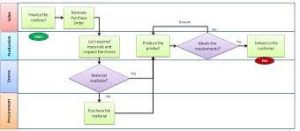
  • Get it visually represented

Process Mapping:

Challenge: Kristie was looking for a way to collaborate with her team on the processes that she documented on her computer without having to print out the information and gather in a conference room

Lombardi Software: began to work with Kristie


Salient Founder and CEO worked at Lombardi and IBM acquired Lombardi several years ago

  • Lombardi developed Blueworks Live, and Kristie was the guinea pig
  • Started going through the new employee onboarding processes, did a lot of roadshows and captures within Excel, and Lombardi built a product (Blueworks Live) on the fly for Kristie
  • Blueworks Live: Has now become Kristie’s favorite process improvement tool
    • Able to capture everything they wanted in a process and make it shareable
    • Gives her the ability to collaborate and to be able to see a process
    • It becomes a living, breathing document
    • One of the key pieces of process
    • Continues to evolve and can be updated
      • Very important
Change Management
  • Kristie works with Prosci, the Global Leader in Change Management Solutions
  • Change management is always an important part of process
  • You will either get more or less buy-in depending on the communication involved
  • People just want to be communicated with
  • Help people understand why changes are being made and what it is going to do for them
    • WIFM: What’s in it for me?
  • Make sure you are communicating all the time
  • Remind them it is not always about headcount reduction
    • Oftentimes, employees see process people as people who are coming in because a layoff is going to happen, which is not the case in many situations
  • Real Goal: looking for cost savings, efficiencies, how to automate processes, etc.
  • Process does not discriminate depending on the industry it is in
  • Change management is the bridge from your current state process to your future state process

Aspects of Change Management:

Help them understand what you are trying to accomplish

Important with ALL levels of the organization

Evaluate where they are at from a change perspective

Some will champion change, and some will submarine change

Getting excitement behind a project is sometimes what jumpstarts a program or project

Cannot forget about the people-side of projects

Process perspective: Change management can come in and help kickstart a project

Executive sponsorship

Advice: Don’t miss the benefits that help justify automation projects and get the excitement behind those projects

You can improve cycle time or wait time, but also ask how the change is going to affect people

  • Ask:
    • What impact does it have to my internal employees?
    • What impact does it have to customer experience
  • Example: You reduced cycle time which means you will save $3 million, but it also means that clients are able to execute processes 6 days faster than before
  • You have to understand from the person that does the job on a day-to-day basis to fully understand a process, not the executive

Process Improvement and Business Automation:
  • Catalyst: COVID-19 Pandemic made people realize there are a lot of processes that could be done differently

    • Not out of want but out of need
    • Process change was not impacting customer experience, it was making customers happier
  • Challenge: companies tried to change too much too quick
    • Advice: ALWAYS prioritize how your employees and customers experience the change
  • Process improvement:

    • Ask “Why?”
    • Get the information, story, editorial behind every process first
    • Find the pain points
      • Pain Point: Focus on what is so common and happens so often, not the most recent inconvenience or something only applicable to your life
    • You can’t have process without good data
    • You can’t have process and good data without change management and visibility
  • Management should prioritize the low-hanging fruit, in addition to big projects, to make their employees day-to-day work better
    • Employees will not always see the effect of a shorter cycle time
    • Improving employee morale is sometimes just as important as giving them a raise
Use Case:
  • Kristie was on an effort called “The 20th Century Workplace”
    • 1990s
  • Challenge:

    • Find better ways to include and involved people who were on conference calls but could not be in the office
    • There were notes captured in the office that employees on the phone could not see
    • Work on a same project with people in different time zones and global regions
      • Build relationships with people of different cultures
  • Solution:

    • Transformed teleconferencing experiences through process improvement and automation
      • Example: Blueworks Live
    • With automation, Kristie and other employees were able to establish real, genuine connections
Overview: Advice from Kristie
  • Keep it simple
  • Never stop learning
  • Blueworks Live is a valuable tool for mapping, collaboration, and evolution of processes
  • Change management is the bridge from your current state process to your future state process
  • Prioritize your employees and customers in the change
  • Every process has an opportunity to improve
  • Sometimes the best process is that one that can be automated and complemented by some type of people interaction
  • Ask “Why?”
  • Digital Business Automation allows employee and customer experiences to be easier and flow better, not be replaced
Watch Episode 13 Interview with Dr. Kristie Collins Now

are there more episodes?

YES! Bots & Thoughts is officially on all podcast streaming platforms. Check it out now!

https://www.salientprocess.fm/

Have a topic idea? Let us know!

We would love to hear from you. This podcast is for you, and if you have something that you want to hear, we would love to know. This form is also a place for you to ask questions or get in touch with our Salient Process team. 

Submit a request for a podcast topic here❗


👉Subscribe to Bots & Thoughts: The Digital Business Automation Podcast

👉Subscribe to our Spotify Here

👉Subscribe to our Apple Podcast

👉Subscribe to our Google Podcast Here


⏩Subscribe to Salient’s Monthly Newsletter Here 

🎤Be our next guest! Sign up Here

📲Contact our Podcast Host Here 


  ⏩LinkedIn

👉 Follow Bots & Thoughts on Here

👉 Follow Salient Process Here

👉 Follow our Podcast Host Here

  ⏩Youtube 

  ⏩Twitter 

🌐Learn more at Salient Process


RELATED CONTENT


More on Digital Business Automation:

Digital Business Automation Home Page

What is Digital Business Automation?

Scaling Beyond RPA to Digital Business Automation

North Star Methodology

More on Salient Process:

Salient Process Home Page

Bots & Thoughts: The Digital Business Automation Podcast

Salient Process is a full-service digital business automation shop and proud IBM Automation business partner. To learn more about us at our website, request a free consultation with one of our expert automation advisors! We look forward to guiding you and your company along your own unique Digital Business Automation journey.

Digital Business Automation as a Lifestyle with Mike Lim, IBM’s Global Acquisition Leader


On this episode of Bots & Thoughts, our host, Jimmy Hewitt sits down with IBM’s Global Acquisition Leader, Michael Lim, to discuss his experience in the #Digital Business Automation space, focusing specifically in on the Process Mining world. They discuss the IBM Process Mining Acquisition that Lim made last year and more. This is an episode you do not want to miss!

Watch Episode 12 interview now!

Follow along with the episode now!

Guest Background: Michael “Mike” Lim, Global Sales Acquisition Leader, Data, AI & Automation, at IBM
  • Work with acquisitions on the software side of IBM’s automation portfolio
  • Been in the Digital Business Automation space for 20+ years
  • Most of career has been with software companies to build technologies that help people embrace automation
  • Been involved with services projects as well

A Thought Leader:

Advised vendors on building Digital Business Automation solutions
Find automation technology to be very rewarding

Gets to see the fruit of how it transforms businesses and organizations

Worked with workflow for most of career


Digital Business Automation

Workflow

  • Technologies that help deliver work to people or systems to get a business outcome
  • Business process management
  • Orchestration
  • Matured overtime:
    • Used to be really code driven based
    • Wrote code to describe how work was triggered already
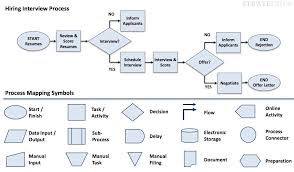
  • New standard: Business Process Modeling Notation (BPMN)
    • Wanted a unified standard to do interchange and describe execution of workflow application or solution
BPMN: focuses on 3 aspects of workflow
  • 1. Allows you to describe what the workflow tool or the business process manager tool is trying to understand or what it is trying to do
  • 2. Gives you the ability to analyze and do “what if?” scenarios on models and ensure that it is optimal
  • 3. You can build applications and solutions


Managing by Control vs Managing by Exception:
  • Managing by Control: manage what you understand and anticipate what is going to happen
    • Example: What is status of project, when will it be done, do you need help, etc.?
  • Managing by Exception: manage what you don’t anticipate happening
    • Example: Onboarding 1,000 employees a year but only managing several that need assistance with the onboarding process
    • The market and world are changing so rapidly, so you must handle the exceptions that come up by adjusting and adapting
    • Fix the problem, don’t use duct tape
    • New low code, no code technologies and managing your business processes with a workflow management platform make it easier for a businessperson to make adjustment then to require heavy duty technical resources
Process Mining Acquisition Drivers:
  • 1. Dynamic changes in the market:

    • Pandemic: Following the COVID-19 Pandemic, the need to drive business in a digital manner was explosive
    • Digitization:
      • If data is on paper, it becomes stale
      • When you digitize it, the data comes alive and can give guidance and navigation on what customers want
    • Processes: The processes that companies were running their business on were not designed for working from home
      • Companies struggled to find what parts of their business processes they needed to change or adapt to the new way of work
  • Consulting Costs & Time:
    • Before Process Mining: Hire a big global systems integrator to come into your company, do a whole analysis of your business, and form a report
      • Cost thousands to millions of dollars to do
      • Needed to do this is a short amount of time to find where adjustments needed to be made to adapt to the new normal following the pandemic
      • Only way to do this is to look at log files that were driving the company to give them visibility into how the organization operates
    • With Process Mining:
      • Technology looks at how businesses operate
      • Looks like a management consulting firm and gives you visualizations to see how your business run, but without the time and costs of a firm
    • Use Case: Onboarding
      • 9,  times out of 10 C level executives don’t know how their customer onboarding processes work
      • Lim looked at the logs of the customer onboarding process and showed them a picture
      • If 80% of processes work this way, then 20% has derivations of the process
      • Manage the 20% by exception
      • No longer have to look at 100% of the processes, they only need to focus on the 20%
  • 2. Prioritization:

    • Many customers buy a lot of technology and then don’t know how to apply it first, second, and third because they do not have visibility in the overall business process
    • Process Mining helps prioritize technology, Digital Business Automation, or digital transformation projects based on what is going to give them the most value upfront
Process Mining Technology:
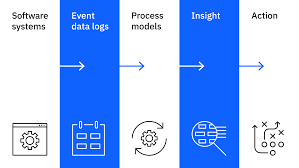
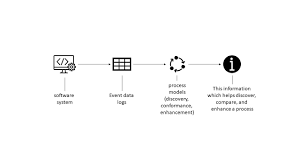
  • Retrieve log files and import them into process mining platform and you will receive a process model
  • Digital exhaust: every application has log files of the chronological order of what actions were taken, by who, at what time, and what the actions was not
  • Based on the data from log files, it will start building up a picture of what happened in a process or department
  • Will only generate the pictures where you have log files (using a computer)
    • However, can go in and fine tune an activity that isn’t in the picture where you were not using a computer
    • Example: technician of cable company driving to a site
Process Discovery: Process Mapping and Process Mining

You should use both technologies

  • You must have a baseline understanding why derivations exist
  • Discovery allows you to interact and understand the current processes and what you think the process should be


Can compare actual data to the reference model you created (for example, in Blueworks Live) and revalidate what is truly happening

Process mapping and process mining are best used together


The two tools are more complimentary than competitive


Lim’s Favorite Use Case: Department of Justice

Project: building out the business process model for how a bill becomes a law

  • Interviewed the process, understood everything that happened in the process, and then built it into an application
  • Government was embracing process modeling to define the process
  • Built some of the early workflow applications that managed the process

Future:

  • Using blockchain to connect companies who are process mining together who are process mining and work to look at the whole interconnected process between companies
  • Companies working together and optimizing supply chains ==to drive value holistically
Digital Business Automation & Process Mining Reminders:
  • Lifestyle change: Digital Business Automation is a program, similar to a lifestyle change

    • It is about marking the health of your company and ensuring that you are always going to understand how the market impact will dynamically change how your business should operate overtime
    • There is no end to a Digital Business Automation implement using agile, different aspects of automation in the business and as the market changes, you want to analyze if you are still seeing value from what you implemented or if you need to pivot or adjust
    • According to Lim, most of the failures in automation is when companies implement automation as a finite project and then they have no ability to add in controls to adjust for change.
    • You do not get 100% of the benefit from the first project, you get it as it evolves over time and as the business is evolving overtime
    • Digital Business Automation is not a sprint it’s a marathon
    • Must ensure your business is resilient when there is change
      • Pandemic was a wakeup call
    • The degree of how companies apply automation and where they apply it will be determined based on the individual projects, wins, process mining, etc. for proof of concepts
  • Process Mining: Use Process Mining to determine what project to do first

Look at all the potential opportunities from Process Mining that you have that could be automation candidates (Example: RPA project that could go in and digitize some of the workload that humans are doing)

Low-hanging fruit = Proof of Concept


Process Mining will help you run simulations to help you prioritize all the opportunities

Start small, but know it it’s incremental

Digital Business Automation drivers:
  • 1. Great resignation: lack of workers, high rate of retirees
  • 2. Value of work: paycheck is not enough for the millennial generation, they want to do meaningful, valuable work
  • Technology (example: Task Mining) can start recording actions and how people do work, and technology is going to start learning and digitizing those skills and making them available as a knowledge repository
  • Humans are going to be much more focused on the critical thinking of how to apply the skills learned and focus on higher-value work
    • While people retire, companies will be able to reap and keep the skills that employees are performing
Overview:
  • BPMN Standard focuses on 3 aspects of workflow:
    • 1. Allows you to describe what the workflow tool trying to understand or do
    • 2. Gives you the ability to analyze and optimize
    • 3. Helps build applications and solutions
  • Drivers of why process mining for IBM was important:
    • 1. Wanted to make sure customers were ready for the dynamic changes of the business in the market
    • 2. When companies have a list of projects, how do they prioritize it to what’s going to give them the best value form their investments
  • Process Discovery: Process mapping and process mining are best used together
  • Advice: don’t think of Digital Business Automation as a project, think of it as a lifestyle change
    • Need agreement at the executive level
    • Make sure your company is healthy and resilient with change
  • Process Mining: the tool to help your company understand which automation to implement first
  • Three things that keep people motivated to stay at work: from Mike Lim
    • 1. Need to have fun, love, and enjoy what you do
    • 2. Need the ability to innovate
    • 3. Salary
  • What is preventing the balance of these three points is the repetitive, mundane work that people have to do that automation can do instead
  • Up to 40% of employee work is repetitive
  • Need technology to augment the repetitive tasks
  • We’re in the age of the employee now where we need to focus on employees and making sure that they have meaningfulness and purpose in their companies
    • They will continuously bring a fresh mind and fresh view to your company without being held down with mundane work
Watch Episode 12 Interview with MIKE LIM Now

are there more episodes?

YES! Bots & Thoughts is officially on all podcast streaming platforms. Check it out now!

https://www.salientprocess.fm/

Have a topic idea? Let us know!

We would love to hear from you. This podcast is for you, and if you have something that you want to hear, we would love to know. This form is also a place for you to ask questions or get in touch with our Salient Process team. 

Submit a request for a podcast topic here❗


👉Subscribe to Bots & Thoughts: The Digital Business Automation Podcast

👉Subscribe to our Spotify Here

👉Subscribe to our Apple Podcast 

👉Subscribe to our Google Podcast Here


⏩Subscribe to Salient’s Monthly Newsletter Here 

🎤Be our next guest! Sign up Here

📲Contact our Podcast Host Here 


  ⏩LinkedIn

👉 Follow Bots & Thoughts on Here

👉 Follow Salient Process Here

👉 Follow our Podcast Host Here

  ⏩Youtube 

  ⏩Twitter 

🌐Learn more at Salient Process


RELATED CONTENT


More on Digital Business Automation:

Digital Business Automation Home Page

What is Digital Business Automation?

Scaling Beyond RPA to Digital Business Automation

North Star Methodology

More on Salient Process:

Salient Process Home Page

Bots & Thoughts: The Digital Business Automation Podcast

Salient Process is a full-service digital business automation shop and proud IBM Automation business partner. To learn more about us at our website, request a free consultation with one of our expert automation advisors! We look forward to guiding you and your company along your own unique Digital Business Automation journey.

Turn $20k into $250k Every Year using IBM RPA with Tim Goff 


This episode of Bots & Thoughts dives into how IBM RPA has helped automate the middle/back office work for FedEx Ground Linehaul Contractors. Special Guest Tim Goff, CEO/Founder of GForce Software, and our host, Jimmy A. Hewitt, discuss how automation maximizes performance, quality of life, profitability, and more.

Watch Episode 11 interview now!

Follow along with the episode now!

Guest Background: Tim Goff, CEO and Founder at GForce Software, Inc.

GForce Software

Makers of mygroundforce: https://mygroundforce.com/

mygroundforce: Automation for Linehaul Contractors
Automates virtually every middle and back-office process or task associated with managing a FedEx linehaul contractor business

Powered by IBM RPA


Tim Goff

“I went from flying planes to running high tech networks to running a trucking company”

  • Grew up in West Tennessee and always wanted to be a Navy pilot
  • Went to the Naval Academy and then flew airplanes for the Navy for 9 years
  • After Tim got out of the Navy, he took a job as one of the early fiber optic engineers working for Corning
  • Spent 25 years in high tech communications
  • Moved from the passive network side to the active network side and held several different roles in hot, very high-tech equipment laser transmission systems
  • Ran a global division and a Fortune 500 company installing networks around the world
  • Was a VP Quality
    • Quality certified manager
    • Understood the implementation of world class business processes throughout the business
  • Was a COO of a startup company that built the fastest network in the world for high frequency traders between Chicago and New York
  • After the startup was sold, Goff bought into the FedEx ground linehaul business
    • FedEx does not own any trucks
    • Small businesses do all the transportation
    • All trucks are owned by contractors
  • Now has two FedEx Ground linehaul trucking companies
    • Run 50 trucks across three states in the southeast
  • All three distinct chapters of Tim’s life pull on the same skillset
    • Procedural
    • Good, efficient, quality-compliant processes
  • Has done automation projects in the past
Digital Business Automation at GForce Software:

Challenges:

  • Maximize the value of the people that we have, but have as few people as we need
  • Lean on technology to help advance the company strategic goals, particularly financially
  • Tim asked other contractors what tools they use to run their businesses and they didn’t have any
  • FedEx did not instruct Tim how to be a contractor
  • Required to be a compliant operation with the fortune 50 company
  • The more you grow, the more people you need to stay on top of all the responsibilities
    • Costs money
  • Human involvement: If the human is not there to work, key processes in the company come to a halt
  • Costs: Cannot grow your business and improve profitability because the cost curve is stuck directly to the growth
    • To grow and scale your business, you have to flatten the cost curve
    • Couldn’t flatten he cost curve in the FedEx ground linehaul business with the tools in place when Tim began

RPA Solution:

Reached out to a friend who had started a software company and was writing some of the best RPA code in the world for automation solutions

Architected the first version of the system and then built a prototype using basic technology and the RPA robot

Demoed it in February 2020. Put together a business plan


Business plan: automate everything inside a FedEx Ground company

  • There would not be a need for any spreadsheets, admins, etc. to run the business
  • Would need an office manager inside your company to stay on top of all the automation
  • The automation would feed the robot and the robot would do the work
Use Cases: 

Payroll

  • Challenge: every Tuesday at 9 PM, a settlement statement is released summarizing all the work from the previous week in the company

    • Origin to destination, what truck was used, what driver it was, fuel information and charges, how much you got paid per run, etc.

    • PDF or CSV flat file

      • Continue to accumulate flat files

      • Have to put data into pivot tables or very complicated macros in Excel

    • Very labor intensive

  • Solution: RPA bot logs in and downloads your settlement and puts it into the SQL database running on the Azure cloud in the relational database section.

    • Very cyber secure so data is completely safe

    • Once all your data is captured, the robots run all night on Tuesday night and when you wake up on Wednesday morning, there’s been a lot of work done and it’s all available to you.

    • Set point and click rules for all employees

    • It takes less than 20 seconds to enable payroll for an employee

    • Also track non-driver employees so we can they can do a complete payroll for your whole company

    • Essentially feed the robots so then on Tuesday night whenever the settlement gets downloaded by the robot then they start plowing through the data, they use the rules-based system, and they determine what the driver did

    • Does calculations associated with the rules for what the driver actually did

  • Outcome: turn out payroll without error every Wednesday morning

    • Was spending 60-70 man hours a week before RPA

    • Now on Wednesday morning the office manager comes in, goes through the payroll report, makes the few manual notations that need to be made, and payroll is done

    • Have not had a driver complain about not getting paid properly since we started using the software

    • Pay full price, $18,000-$20,000 /year for subscriptions, and this year (2022) it will save the company about $250,000.

    • Pays for itself 10 times over per year

Compliance: driver compliance and truck compliance

  • Challenge: used to track everything needed to stay compliant with drivers and trucks (i.e., drivers have a commercial license, license, a medical card, etc. that expire on a period basis and trucks have annual inspections and service intervals that must be maintained) in spreadsheets
    • Driver compliance: Full time employee tracking 50+ drivers and contacting drivers trying to make sure that all documents came in and were updated
    • Truck Compliance: Full time employee managing truck maintenance, scheduling, and compliance
  • Solution: automated the compliance tasks with RPA

Whenever the company onboards an employee, they put in all their compliance information in the system.

The RPA bots then manage compliance

Set up their notification rules

Has a powerful text engine and e-mail engine in the system and the robots communicate proactively based on the rules that they’re fed

  • Outcome: Start getting compliance update notifications by text and by e-mail at 11 AM EST 90 days before your update is required
    • Drivers and supervisors both notified
    • No human manager needed to manage the compliance updates anymore
Business Management: Advice from Tim Goff
  • Any business that’s having repeatable positive performance has some key performance indicators that they pay attention to
  • TL 9000, ISO 9000, Six Sigma, and other world class processes yield metrics will help you understand what’s going on in the business and what levers you need to pull to get the numbers going in the right direction, which is a health indicator of the business
  •  All the health indicators are supposed to help you improve the profitability in the business.
  • If you’re not measuring what’s going on in your business, you cannot manage it
  • When you encounter a problem in the business, you immediately need to look at the data and then figure out how you can identify key performance indicators from that data to keep your company from making that mistake again.
  • Before you can measure data, you have to get command of that data by architecting systems that get command of the data
mygroundforce Transformation:
  • Get settlement information and put it in a database, collect driver information, truck information, and other scheduling information, and then leverage the bots to take that data and turn it into key performance indicators for the business.
  • Went from a ton of spreadsheets to no spreadsheets and from a calculator to no calculator because the company architects everything now
    • Used to spend most of time all week crunching numbers, pulling data, putting data in spreadsheets, and calculating data
    • No longer need to do this work
  • Dashboard: Built a dashboard and the bots update that dashboard every Tuesday night
    • All dashboards have trendlines to compare weekly performance
    • Wake up every Wednesday and the key performance indicators are already done
    • Malleable: Can manipulate the dashboard to see exactly what you want or need to see
      • Can view at company level AND the driver level
      • Can compare the productivity across companies, drivers, and trucks
    • Rich reporting polling data from various sources (i.e., online portals, emails, attachments, spreadsheets, CSV’s PDFs, etc.) into management friendly dashboards
  • Commercial opportunities:
    • Take the trucking platform for FedEx Ground contractors, add some very slight modifications, then it’s also going to have a commercial opportunity with, for instance, Amazon Relay contractors or regular trucking companies
    • Have had meetings with companies in Spain and Brazil to do similar work but in a different language
      • The bots used operate in 100+ different languages
      • Have to change your processed slightly to kind of match how different cultures think and work
Overview:
  • Future of RPA seems unlimited on what you could potentially accomplish
  • RPA Robots:
    • Completely adaptable: They have an infinite ability to change and adapt to what you’re trying to accomplish
    • They mimic human behavior on a computer
    • Help the worker shortage: Robots can do an awful lot of work for your company and allow you to repurpose employees that you have doing what you think are fundamentally important tasks
    • Value:
      • If you think about how that work is getting done, you can leverage RPA technology to do that work and take that existing valuable employee and put them down doing something that’s more high value-add
      • Business leaders need to start thinking “how can I automate what I’m doing” and by doing that you can grow your company at a lower indirect cost which improves profitability
    • Indefinitely scalable: separate your cost curve from your growth curve
Tim Goff Advice:

Understand what people do

  • Ask yourself:

    • “What are we sticking minutes to?”

    • “Can I find a way to stick fewer minutes or no minutes to that particular task?”

  • All those extra minutes are costing you money when you could be growing revenue

  • It’s not to quit doing the work, but to do the work more efficiently and repurpose that headcount into doing things that are more valuable

  • You might be surprised on how much time you’re spending doing things that really are not furthering the strategic purpose of your organization.

  • Don’t be afraid of the technology:

  • There are organizations, like Salient Process, that know what they are doing and can integrate the capabilities into your company with you

  • Technology is simple to use and will give you huge returns

  • You are not just automating minutes and repurposing employees, you’re also maximizing the value of your time!

  • You are not just automating minutes and repurposing employees, you’re also maximizing the value of your time!
Watch Episode 11 Interview with Tim Goff Now

Are There More Episodes?

YES! Bots & Thoughts is officially on all podcast streaming platforms. Check it out now!

https://www.salientprocess.fm/

Have a topic idea? Let us know!

We would love to hear from you. This podcast is for you, and if you have something that you want to hear, we would love to know. This form is also a place for you to ask questions or get in touch with our Salient Process team. 

Submit a request for a podcast topic here❗


👉Subscribe to Bots & Thoughts: The Digital Business Automation Podcast

👉Subscribe to our Spotify Here

👉Subscribe to our Apple Podcast

👉Subscribe to our Google Podcast Here


⏩Subscribe to Salient’s Monthly Newsletter Here 

🎤Be our next guest! Sign up Here

📲Contact our Podcast Host Here 


  ⏩LinkedIn

👉 Follow Bots & Thoughts on Here

👉 Follow Salient Process Here

👉 Follow our Podcast Host Here

  ⏩Youtube 

  ⏩Twitter 

🌐Learn more at Salient Process


RELATED CONTENT


More on Digital Business Automation:

Digital Business Automation Home Page

What is Digital Business Automation?

Scaling Beyond RPA to Digital Business Automation

North Star Methodology

More on Salient Process:

Salient Process Home Page

Bots & Thoughts: The Digital Business Automation Podcast

Salient Process is a full-service digital business automation shop and proud IBM Automation business partner. To learn more about us at our website, request a free consultation with one of our expert automation advisors! We look forward to guiding you and your company along your own unique Digital Business Automation journey.

How to Modernize Your Enterprise Content Management & Capture Posture with Jim Picardi 


This episode of Bots & Thoughts focuses exclusively on Enterprise Content Management and Intelligent Capture solutions. Our host, Jimmy Hewitt, is joined by a new guest, Jim Picardi, Executive Vice President of Sales and Marketing at enChoice, an award-winning Content and Capture services provider. When it comes to the successful adoption of Content and Capture, look no further than Jim and his team at enChoice. The two discuss the ins and outs of successful Content and Capture adoption and provide their expertise throughout the discussion. Content and Capture are essential elements of the Digital Business Automation journey, so you don’t want to miss this episode!

Watch Episode 10 interview now!

Follow along with the episode now!

Guest Background: Jim Pacardi, Executive Vice President of Sales and Marketing at enChoice

Enchoice

Help companies design, implement, and support their digital transformation initiatives

Leverage experience and technologies like Capture, Enterprise Content Management (ECM), & Business Process Management (BPM)

Company has 30 years of experience. Most employees have an average tenure of over 15 years in the industry

100+ employees

100% focused on the core business of Capture, Content, and process management

Began as a FileNet company in 1990s.

Customers were looking for a business partner to help them implement a total solution for new technology


Digitization of documents and implementation of electronic workflow processes

Experience and level of quality of the employees at enChoice separates them from others in the industry

Jim Picardi

  • Been in Content management business for 30 years
  • Started with FileNet as one of the first salespeople in the Boston area
  • Then held roles in FileNet and IBM sales leadership
  • Worked for Kofax as a regional vice president for several years
  • Came to enChoice 9 years ago
  • Made a career out of the content management business
Digital Business Automation at enChoice:

Capture of information:

  • The ability to ingest content and metadata is tough to do and is/was a largely manual effort that is now being smoothed by Digital Business Automation
  • Digital Business Automation allows companies to streamline the front end of a process by ingesting information automatically with artificial intelligence, machine learning, and other capabilities that are very important because it takes a lot of the manual effort out of the process

Growth area:

  • the technologies work very well today and there are a lot of standard platforms that do very well, but most customers are not taking advantage of that yet, so it is a significant growth area for the industry

  • Most clients are in one of two current states:

    • 1. Company has implemented a solution and are trying to take it to the next level
    • 2. Company has never implemented any kind of solution

enChoice’s goal:

  • take companies from wherever they are today to the next level
  • Example: If it’s a first-generation system that they’re looking at, then they identify what their processes are today and envision of what could happen with digital transformation
  • Common Challenge: A lot of companies are not getting the most out of the capabilities that are possible…

  • 2 Examples:

    • 1. Companies are using a document capture solution, but they are not using any artificial intelligence or machine learning
      • They have documents come into the company that still must be separated and indexed manually where they could be taking advantage of artificial intelligence, machine learning, and all the other technologies that are available to classify or recognize what kind of document it is and then extract information from it
      • Think about the manpower required to do this when you are receiving hundreds of thousands of documents a day that people must split and index
    • 2. Companies are using a content management system, but they haven’t implemented process management to capture content at the front of the process and streamline that process from beginning to end

Common Use Cases: there are hundreds of current and potential use cases, but some examples include…
  • Any industry: accounts payable/invoice processing
  • Insurance: claims processing
  • Banking: mortgage underwriting/mortgage servicing
  • Government: case management
Jim Pacardi’s favorite use case:
  • Company Info: Company  specialized in student loan servicing
    • Revenue: $16 Million
    • 300 employees
  • Challenge: Inundated with paper and process
  • Solution: Spent >$1 million on implementing a content management and process management system
  • Outcome:
    • Received a strong ROI
    • Transformed their business
    • Completely changed their processes to all electronic processes
    • Gave them all access immediately to files
    • Allowed them to grow their business without increasing the number of employees in the company
  • Lesson: irrespective of how big your company is or what your business is, if you have the right leadership at the company and you have the right focus on what the business problem is, then you can transform your business
    • If there is waste in your organization, there is gain
    • Technology is very approachable from price point, ease of use, and time to value perspectives for customers of all sizes

Constants:

  • The intent of systems has always been the same…
    • “How do we increase productivity?”
    •  “How do I provide better customer service?”
    •  “How do I deal with all the regulations and governance inundation that I have to follow for my organization?”
    •  “How do I do everything I need to while driving down costs?”

Changes:

  •  The means to achieve the intent of the business has changed
  • The technology has improved
    • Example:
      • Moving to the cloud
      • Software as a service
      • Hosted solution
  • More alternatives available for the complexities of implementing and supporting solutions
    • There are a lot more options for customers in terms of outsourcing an entire operation
      • On-prem is no longer the only option
  • Artificial intelligence is making it much easier to ingest content
EnChoice Accelerators, Plug-ins, Software, and More:
  • The company’s tagline is rooted in acceleration and time to value
  • They developed accelerators on top of Digital Business Automation solutions that are allowing customers to experience faster time to value and make the software even easier to use
    • Acquired the company Magic Lamp Software, who spent years making accelerators for the entire intelligent capture space to allow companies to more easily ingest documents and content off those documents and manage that whole process
  • Cut the time it takes companies to get in tools into production and start taking advantage of the system
    • Time to Value: incredibly important component of any system
  • Market: Everyone is trying to drive down the cost of the systems
  • Legacy systems: With the aging workforce, a lot of companies have lost their support structure with legacy systems
    •  There is a move to offload support and administrative aspects of legacy systems
    • Companies want to drive down costs while also depending on third parties for support
      • A lot of companies move to cloud, software as a service, and/or hosted solutions
  • Competition: Companies are being forced to implement new technology (or seek help in supporting what they already have in place) through competitive factors
    • Example: Pandemic forced industries/companies to take huge leaps forward in a matter of months and if the companies/industries cannot adjust accordingly, then they will not survive
Takeaways

Digital Business Automation takes a lot of the manual effort out of ingesting content and metadata

Artificial intelligence is making this process even easier

A lot of companies are not getting the most out of the capabilities that are possible: oftentimes…

Companies are using a document capture solution, but they are not using any artificial intelligence or machine learning OR

  • Companies are using a content management system, but they haven’t implemented process management to capture content at the front of the process and streamline that process from beginning to end
  • It does not matter the size of your company; anyone can benefit from Digital Business Automation
    • If there is waste in your organization, there is gain
    • If you have the right leadership at the company and you have the right focus on what the business problem is, then you can transform your business regardless of how large your company is
  • Using the great, new technologies is making the business journey a lot easier than it used to be, but the objectives are very similar to what they used to be
Jim Pacardi Final Advice:

To have a project, you need two things:

  • Executive sponsorship: if you look at the most successful projects, you have an executive team that is completely bought into transforming their business
    • Typically, this is a Line of Business Executive
    • Projects will go nowhere without the support of an executive sponsorship
    • Ask yourself: “Do I have an executive who is driving this initiative?”
  • Return on Investment: you have to be able to justify the business with an ROI (unless the project is surrounding a non-ROI strategic initiative)
    • You need a well-ironed-out, logical business case for your new project to stand on first
    • It is typical that you are competing against other projects for who has the best ROI
    • Ask yourself: “Do I have a good business case for this initiative?”

Note: highlight best practices and set the right expectations when transforming your business

  • Decision-making and implementing Digital Business Automation can be complex within a company…
  • Decisions are made with committees, or a bunch of different constituents, who all have a job to do and are all looking at it from a different perspective
    • You’re changing the way an organization has been doing business
  • It is all about cultural change, which is very understated and something that organizations are now forced to think about
  • You are sometimes completely changing people’s roles and how they process work or completely changing the complexion of the company and how it works
  • Transforming your business is not always easy, it is complex, but it is doable
  • Have the right people in place on both sides of the transformation
Common barriers for ECM solution adoption:
  • Executive sponsorship
  • Resources: time, money, etc.
    • Time: Many people often want to weigh in
    • Money: Determining the right place to start amidst competing problems
      • There can often be limited resources

Salient’s proprietary tool, Automation Compass, can look at the return on investment for a variety of different projects and identify the winners

“Stick to your knitting” as a company. enChoice has never “gone off course”

Success of a business:
  • The company is 100% focused on the digital transformation and implementing transformative solutions for their customers
  • Build out your portfolio, while still remaining focused on your goal and not deviating from your path
    • enChoice has made 6 acquisitions
    • Focus on your Net Promoter Score
      • enChoice does 80% of their business with existing customers
      • enChoice NPS: 9.4/10
      • been tracking NPS since 2003
Watch Episode 10 Interview with Jim Picardi Now

Are There More Episodes?

YES! Bots & Thoughts is officially on all podcast streaming platforms. Check it out now!

https://www.salientprocess.fm/

Have a topic idea? Let us know!

We would love to hear from you. This podcast is for you, and if you have something that you want to hear, we would love to know. This form is also a place for you to ask questions or get in touch with our Salient Process team. 

Submit a request for a podcast topic here❗


👉Subscribe to Bots & Thoughts: The Digital Business Automation Podcast

👉Subscribe to our Spotify Here

👉Subscribe to our Apple Podcast

👉Subscribe to our Google Podcast Here


⏩Subscribe to Salient’s Monthly Newsletter Here 

🎤Be our next guest! Sign up Here

📲Contact our Podcast Host Here 


  ⏩LinkedIn

👉 Follow Bots & Thoughts on Here

👉 Follow Salient Process Here

👉 Follow our Podcast Host Here

  ⏩Youtube 

  ⏩Twitter 

🌐Learn more at Salient Process


RELATED CONTENT


More on Digital Business Automation:

Digital Business Automation Home Page

What is Digital Business Automation?

Scaling Beyond RPA to Digital Business Automation

North Star Methodology

More on Salient Process:

Salient Process Home Page

Bots & Thoughts: The Hyperautomation Podcast

Salient Process is a full-service digital business automation shop and proud IBM Automation business partner. To learn more about us at our website, request a free consultation with one of our expert automation advisors! We look forward to guiding you and your company along your own unique Hyperautomation journey.

RPA and Workflow with Director of Product Management – Automation at IBM, Matt Warta

Over the course of the last 1-5 years, automation has drastically improved our way of life and work. We sat down with the Director of Product Management – Automation at IBM, Matthew Warta, where you will learn about two capabilities within the world of Digital Business Automation, Robotic Process Automation and Business Automation Workflow. You will hear how Workflow has advanced through the years and how organizations are improving their employee and customer experience by implementing RPA and BAW. Companies are increasing productivity, reducing costs, saving money, and more.

Watch episode 9 interview now!

Follow along with the episode now!

Guest Background:Matt Warta, Director of Product Management – Automation at IBM 

Warta has been in the workflow management and automation space since the 80s and entered the space right out of college. He has implemented countless automations and workflows for his clients 

Career Journey: Worked for an insurance payer that had brought in a workflow technology from IBM 

  • First taste of process automation and Warta loved it 
  • Java and Visual Basic Developer 
  • Power Builder  
  • IBM Services  
  • IBM Technology Sales 
  • IBM Partner Community  
    • 12 years 
    • Predominately Automation:  Process workflow, RPA, decisions, etc.  
    • Focus and passion on how to improve the overall outcomes and productivity of organizations and how they do their work 

Current Career: leads the business automation product management team at IBM (International Business Machines) 

  • Rejoined IBM 3 years ago in product management

    • Now the Director of Product Management for IBM’s Business Automation Division

  • Workflow, BPM Process Automation Decision Management, RPA, Process and Task Mining, & Content Services 

The Evolution of Workflow

80s: Process reengineering evolved into workflow 

  • Business Process Management (BPM) was term used for a long time 
  • Then Process Automation, Business Process Automation (SPA), and Workflow used again 
  • Overlap in terms: at points in time, Workflow was considered to be a capability of a Business Process Management Suite 
    • Process Automation required more than just an orchestration of tasks, but also visibility, ability to measure, and interaction with those tasks 

Today: Workflow has taken over again and encompasses the broader spectrum of capabilities within it

  • We are trying to solve the same problems, while technology has advanced greatly 
  • There’s been a lot of changes in technology and types of technologies we’ve applied to automate processes, manage processes, or govern processes 
  • It has always come down to….  
    • “How do I improve the productivity?”  
    • “How do I get things done in a predictable fashion?” 
    • “How can I reduce costs?”  

80s, 90s, & early 2000s: Workflow was thought about as a cost cutting measure to reduce costs, save time, reduce costs in the total time cycle time of getting a product out or approving an application, to just reducing the amount of wait time or amount of time something is on a desk and only doing that 

Last 3-5 years: shifted focus of process automation to improving customer experience 

  • Cost cutting in a secondary benefit. By doing this, we get time savings bringing cost cutting
  • Focusing in on the predictability, consistency, and improvement of customer experience is the main focal and the biggest benefit that we are seeing in Workflow or Process Automation today 
  • In a more experience-based economy now 
    • Experiences are talked about more vocally 

Last 3-1 years:  Businesses are trying to find new ways of working, new ways of getting work done 

  • Companies are taking a step back and looking at their processes as a function of coming out of the COVID-19 Pandemic 
  • The Great Resignation: The amount of work hasn’t changed, but the employee count has 
3 Core Drivers:  

Great Resignation

  • having a huge impact on the way we work and how we work 
  • Need to apply automation to what we can automate so that there’s less work for people to actually touch 
  • Automation is also a way to retain employees 
    • It makes jobs more rewarding by automating tedious tasks to focus on higher-value tasks 
    • It gives you a better work life experience by freeing up your time and allowing you to work on more important tasks 
    • It gives you time to improve your skills with training because you’re not spending hours firefighting other tasks  
    • It provides you with more rewarding work and flexibility 
    • Allows you to focus on advancement within an organization  

Pandemic:  

  • Remote work needs to have connected systems  
  • You can no longer “pass papers in person” at a remote job
  • Companies must automate more of your processes and govern them electronically  
  • Need to digitize more and more 
  • Need to manage how work gets done now 

Resilience: Macroeconomics 

  • The ability to change; our ability to respond to third party unpredicted change that comes out of nowhere 
  • If more is automated, it is easier to change the process or the way a process executes rather than trying to train hundreds of employees about the new end-to-end process and how to perform differently 
Robotic Process Automation (RPA) vs. Workflow

Task Automation VS Workflow Automation/Management 


Workflow (Business Process Management (BPM)/Process Management): more holistic, end-to-end process automation 
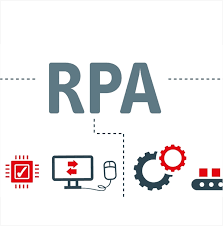
Looking at and optimizing and improving your end-to-end process 

Within the process, you have activities and tasks that need to be done = RPA 


RPA (Robotic Process Automation/ Task Automation): focus more on the discrete individual tasks that are part of a process that need to be completed  

 

Everything that we traditionally do in an organization is serving some purpose which is tied to some value chain within the organization 

Value chain: the identification, creation, and delivery of value to your end customer, partner, vendor, employee, etc.  

Everything is interrelated 

  • RPA is nested within BPM: 

    • Task automation is nested within the broader running process that workflow would manage  

    • You have humans doing tasks, systems doing tasks, integrations, etc. 

  • Workflow Management Implementation:  

  • Most common use cases:

    • Depends on industry  

    • No brainer: onboarding [of an employee, vendor, partner, etc.] 

    • Common: New business enrollment, manufacturing, engineering change requests, obsolescence, overall order to cash process, supply chain, etc.  

Warta’s Advice:

focus on any type of process that is differentiating and has an impact on the business and also the employee 

  • Customer experience AND employee experience are both critical  

  • The largest investment that any company has is in their employees 

  • You can use technology to service your customers as well as having a better employee experience, so they’re going to serve your customers even better 

  • The companies to have both the best and happiest employees are usually the ones that are most successful and are competitive within their respective markets and areas 

Notale RPA Use Case from Warta 
  • Challenge: Organization was looking at going into a brand-new line of business, something they had never done before (wealth management and annuities), and they needed to provide new products to all the all states within the US 
    • To do that, they had to bring out about 10,000 independent agents to sell and service these products, who needed to be vetted 
    • Needed to prove that they had the right training and certifications to be able to do this within the States had to be done this 
    • Each state had its own regulations 
    • The projection was that it would take about hiring of 20 people and up to 18 months to do this manually 

Solution: RPA bots & Workflow 

Within three months they able to put bots in place that were able to do the onboarding of all 10,000 people and allow them to go to market 12-15 months sooner 

Several millions of dollars that they were able to make by going to market sooner 

Used Workflow coordination throughout the project. Most bots were used for the project alone and then weren’t needed again because the value was already received, and their purpose was served  

Saved some bots for future applicants  

  • Shift in market: “We can invest in technology, get the value from it, and then walk away because it’s so great” -Warta 
    • Bots can sometimes just be looked at as digital contractors, where you bring them in for several months to do their job and then their contract expires 
    • You decommission the bot, and you move on with business
Automation Maturity Curve:  
  • Continuous process improvement 
  • Five levels of process maturity  
    • Ultimate state: straight through 
      • Process flows, there is no human interaction, and then you are left with only the exceptions 
      • This takes time, so you can apply different automations that you’ll replace or eliminate once you’ve achieved something more or you no longer have use for it but you have the value from it 
  • Can put a process in place temporarily while you are implementing the final state solution that you are looking at putting in place 
  • The reason behind automation hasn’t changed, but the accessibility to it has 
    • Accessibility examples:  
      • 6-person company automating tasks  
      • A company’s bots paid for themselves in 3 months 
      • South American company’s automation paid for itself in one day 
  • To be able to automate, has the domain knowledge, and has time to do it, is now accessible 
    • Fusion teams: combination of multidisciplinary business domain, IT domain, working together and collaborating, and working on projects from different aspects of projects and solutions independently and together 
      • Evolves over time until we reach that the final outcome 
    • Low code, no code: self-service automation, by putting it into the hands of essentially any individual that wants to be able to automate, has the domain knowledge, and has time to do it, is now accessible 
      • Federated or ungoverned automation by individual departments while IT is working with low code tools (but low code more suited for their personas and types of problems) 
      • Overarching process governance and process optimization initiatives where you’re overlaying the kind of governance and end-to-end orchestration layer that’s using some of these automations that are being developed in a Federated manner and ungoverned by the business and bringing them all together to accelerate the value that the organization is striving for
IBM Workflow Product: Trends they are looking at in the process automation, business automation space… 

Accessibility:  Moving from low code, no code to automation generation through observation 

  • Observing what people are doing and being able to generate RPA, bots or task flows. 

    Being able to generate process flows that do what you do by observation and can generate them and then go through a level of you know self-validation 

  • Not just giving you access to it but making it relatable so that we all work together and we’re preserving the individuality of humans. 

AI and Machine Learning: applied across all business automation and specifically around Workflow and RPA 

  •  

    Digital Labor: Watson Orchestrate

    • AI digital assistant or employee that can curate a set of automations that are relevant to your job and understands what you do in the systems you work with and then through natural language, it can understand your intent and automate the tasks and activities that you need to do on a day-to-day basis 

      Gives you that freedom of how you want to work improves the enjoyment you have at your work and leverage automation within the context of your day 

    • It knows how to work with all the systems in the company for you to achieve the outcomes that you’re asking for
Overview:
  • Measure and plan: 

    • Things are constantly changing, and if you’re not measuring it, you don’t really know the true impact 
    • If you don’t measure, you don’t know where to improve next 
    • Take a step back and plan truly understand what your processes are. 
      • What are the outcomes? 
      • What are your goals and objectives that you’re trying to get to?  
      • How do you have a plan to actually achieve that? 
  • Only way to know you’re going on plan is to measure back to that plan and see where you’re going and what adjustments that are needed 
  • Automation is never done, it’s continuous 

The focus is not technology, it’s solving and improving businesses and problems for businesses 

The biggest benefit of hyper automation is the overall impact it will have on the human being in the end of the day


Watch Episode 9 Interview with matt warta Now

are there more episodes?

YES! Bots & Thoughts is officially on all podcast streaming platforms. Check it out now!

https://www.salientprocess.fm/

Have a topic idea? Let us know!

We would love to hear from you. This podcast is for you, and if you have something that you want to hear, we would love to know. This form is also a place for you to ask questions or get in touch with our Salient Process team. 

Submit a request for a podcast topic here❗


👉Subscribe to Bots & Thoughts: The Digital Business Automation Podcast

👉Subscribe to our Spotify Here

👉Subscribe to our Apple Podcast

👉Subscribe to our Google Podcast Here


⏩Subscribe to Salient’s Monthly Newsletter Here 

🎤Be our next guest! Sign up Here

📲Contact our Podcast Host Here 


  ⏩LinkedIn

👉 Follow Bots & Thoughts on Here

👉 Follow Salient Process Here

👉 Follow our Podcast Host Here

  ⏩Youtube 

  ⏩Twitter 

🌐Learn more at Salient Process


RELATED CONTENT


More on Digital Business Automation:

Digital Business Automation Home Page

What is Digital Business Automation?

Scaling Beyond RPA to Digital Business Automation

North Star Methodology

More on Salient Process:

Salient Process Home Page

Bots & Thoughts: The Digital Business Automation Podcast

Salient Process is a full-service digital business automation shop and proud IBM Automation business partner. To learn more about us at our website, request a free consultation with one of our expert automation advisors! We look forward to guiding you and your company along your own unique Digital Business Automation journey.

Hyperautomation CoE saves $16 million at Clemens Food Group with VP of IT Stu Farber

During this episode, you’ll learn how Salient supported the process improvement journey, which has realized over $16 million in annualized cost savings for Clemens Food Group. Join Host Jimmy A. Hewitt and Senior Automation Advisor Geoffrey Hamm as they sit down with early adopter and VP of IT at Clemens Food Group, Stuart Farber, to hear his thoughts on their Hyperautomation journey and accomplishments so far. Listen to how they’ve saved over $16 million in cost thanks to hyperautomation.

Watch episode 8 interview now!

Follow along with the episode now!

Co-host Background: Geoff Hamm,  Senior Automation Advisor for Salient Process
  • Position automation technologies to see benefits and solve problems
  • Worked with Stu and Clemens Food Group for three years
Guest Background: Stuart (Stu) Farber, Vice President of IT for Clemens Food Group

Early Adopter | Five years Hyperautomation experience

Clemens Food Group: Family-owned business since 1895

  • 6th generation pork producer | 5th largest pork producer in the United States 
  • 4,500 team members

Plants: 3 total

Original: Hatfield, PA

Additional: Coldwater, MI

Smoked Meats: Hatfield, PA

New

 300,500 square feet


  • IT Team:
    • Hardware
    • Software
    • Infrastructure
Clemens Food Group + Salient Process:

Initial concept was to build a Center of Excellence with a full team, create a large scope project, and have dedicated resources for RPA, but kept starting too big, failing, and then COVID hit

Clemens started with several use cases, looked at the best way to do each one, and chose Salient as the company to move forward with for two use cases

Automating Process:

Identified 6 processes or tasks that could be automated

Used Blueworks Live and mapped out the 6 processes, understood the steps, and identified the top two use cases

  • Quick Win First Approach: Quick win first instead of one big initial project
    • Can get the ROI from each individual event. A lot simpler to prove it out
    • Start with a quick win bot, learn what you don’t know as you go, and use the quick win ROI and the learnings from the new bot for an additional bot
      • Agile approach. Proof that RPA can really add value
    • By starting small with quick wins, the percentage of successful hyperautomation and RPA projects goes way up. You don’t have to spend hundreds or thousands of dollars on a hyperautomation or Center of Excellence team until you have proven success
Use cases:
  • Gap in SAP capabilities: reversal of a good’s issue

    • When Clemens produces a good, the reversal of that production (i.e., double printed labels for two pellets of inventory when there was only one) could not be done automatically
    • The goods reduction used to be automated, but Clemens could no longer automate the process with SAP
    • Partnership Formed: Worked with Salient to create a reversal of a good’s issue. Saved hundreds of hours over the years and been a good improvement
    • Team member communicates to the floor on their user interface to now reverse a goods issue without having to involve finance department and other additional employees/departments
    • SAP is a great candidate for RPA because it is tough to navigate, requires a lot of clicks, but is very repeatable
  • Accrual Project: Giving credit rules accruals

RPA + Workflow

RPA can make most decisions, but there is sometimes a piece of the process that does require human intervention

RPA is excellent at automating tasks and workflow is helpful for keeping track of the existing tasks that may need human involvement without impeding on your RPA capacity


Clemens Scenario: There are two accruals that you could do for one single credit, and somebody in the end may have to make that decision

  • Use workflow to send that decision out to the sales team and the sale teammate can make the final choice
  • Only do this when it’s needed, but when Clemens does need it then it that has that ability and that’s why they chose to include workflow.
Automation Integration at Clemens:
  • RPA can often be mistaken for something else
  • Hyperautomation started to take off at Clemens once the company simply started talking about process improvement, not RPA technology

“Basically, when they think about, you know, solving a problem on their own side, right? It’s about process improvement. They don’t think about robots in business…they just want it better and they want it faster and easier for them to use. It’s like if you call a handyman. They bring their toolbox. You don’t call him and say I need you to bring 3 screws…”

Process Improvement Process: Moving forward


Clemens follows a business-driven IT Process:

1. Meet with their businesses once or twice a week

2. Talk about the issues they’re having

3. Talk about the projects that are going on

4. Talk about how to solve their problems

5. Add the project to the automation list

6. Once project is on the list, Clemens makes a decision on its priority based on the ROI/the reduction in team member headcount hours that it takes to do the task

7. When the project gets to the top of the list, it begins


Overview:

Consistent meetings with the businesses, capturing use cases, quantifying the benefit of solving one in comparison to another, developing them accordingly, and recording everything to chare with the business

  • Benefits of sharing information collected with their businesses:
    • People see the value of IT
    • Helps for prioritizing
  • Clemens objectives:
    • Priority: Compliance or something that is broken
    • Business analysts that work with each department choose
      • Often have high hours or have ROI
      • Always based on business needs
      • Large company initiatives
Clemens Success:
  • Started recording in 2008
  • Saved $16 million/year
  • Hours saved since 2021: 450 hours/year
Hyperautomation at Clemens Today:
  • The ownership always stays with the business
  • Clemens works with the business, they define their needs, and Clemens helps execute those needs with the help of Salient
Bonus Use Case: Password Reset

Clemens has a large Spanish speaking contingent in their team members. The HR package required them to change their password to answer 3 questions on the application

  • Challenge: They were able to have bilingual or multilingual options in all their application except for these three questions
    • The team members could not read or answer the 3 questions because they were not in Spanish
    • The employees would have to go to HR team to change password
    • 1000 password changes a quarter
  • Solution: Clemens developed an iPad application that allowed the team members to scan their badge and their password auto resets with the help of an RPA bot
    • Project only took 1 week
    • Scope is simple and it is well defined
    • Clemens has does 4, one-week projects. The week includes testing and error handling
  • Result: averaging 40 minutes/day saved
    • Simplified the process
    • Improved employee experience, time savings, cost reduction for multiple business divisions
    • 3 more similar HR self service applications in the works now
Hyperautomation Outlook for Clemens:

Clemens does large projects, medium projects are planned out for the year, but when they see a problem in the business, they jump on it and get them done quickly

Future bots: HR processes, printing pay stubs, and the ability to reprint W2 forms


Overview:
  • Used a Quick-Win-First Approach:
    • Get the ROI for each individual event to show its value to the company
    • Utilize learnings from each quick win in future projects
    • Get support behind automation projects first, then look to create hyperautomation teams or divisions after you prove success
    • Used to add value back to the business
  • Advice:
    • One-week-long projects are possible with well defined projects
    • Make sure you have knowledge on the team of the software and tools being used
    • Focus on and talk about process improvement, not the specific technology
    • RPA + Workflow = great way to automate tasks AND keep track of those task that may require human involvement
    • Use quick wins to add value back into the business
  • Clemens Success:
    • Saved $16 million/year since 2008 with hyperautomation
Watch Episode 8 Interview with Stu Farber Now


are there more episodes?
  • YES! Bots & Thoughts is officially on all podcast streaming platforms. Check it out now!
Have a topic idea? Let us know!

We would love to hear from you. This podcast is for you, and if you have something that you want to hear, we would love to know. This form is also a place for you to ask questions or get in touch with our Salient Process team. 

Submit a request for a podcast topic here❗


👉Subscribe to Bots & Thoughts: The Hyperautomation Podcast

👉Subscribe to our Spotify Here

👉Subscribe to our Apple Podcast

👉Subscribe to our Google Podcast Here


⏩Subscribe to Salient’s Monthly Newsletter Here 

🎤Be our next guest! Sign up Here

📲Contact our Podcast Host Here 


  ⏩LinkedIn

👉 Follow Bots & Thoughts on Here

👉 Follow Salient Process Here

👉 Follow our Podcast Host Here

  ⏩Youtube 

  ⏩Twitter 

🌐Learn more at Salient Process


RELATED CONTENT


More on Hyperautomation:

Hyperautomation Home Page

What is Hyperautomation?

Scaling Beyond RPA to Hyperautomation

North Star Methodology

More on Salient Process:

Salient Process Home Page

Bots & Thoughts: The Hyperautomation Podcast

Salient Process is a full-service digital business automation shop and proud IBM Automation business partner. To learn more about us at our website, request a free consultation with one of our expert automation advisors! We look forward to guiding you and your company along your own unique Hyperautomation journey.

What is Process Discovery?


Following Episode 1: What is Digital Business Automation?, we wanted to introduce the first Mini-Series: What is Process Discovery? In this series, you will learn about the two capabilities within the world of process discovery: process mapping and process mining. Leveraging one or both of these Digital Business Automation capabilities will establish the foundation of your Digital Business Automation journey. You will learn about the what, why and how of both capabilities. Finally, we will share some real-life examples so that you leave this episode informed and ready to kick off your own process discovery journey!

Follow along with the episode now!


What Is Process Discovery?

Process discovery is the practice of capturing the current state of your company’s business processes, whether looking at a single business process or all of them. We cannot improve a process (or even know where to start) until that process or set of processes has been discovered, captured and made available in a highly visual and interactive fashion. Automated business process discovery can help you make improvements to your business. 

These are important components and process discovery steps:

  • Process mapping: This process creates a visual representation of common workflows. The maps help you understand procedures and all their steps more completely. In addition, process mapping allows the user to interact with the process model and discover or quantify the benefits of improving it one way versus another.
  • Types: Your type of process discovery depends on your industry, division or discipline.
  • Basic flow chart: This tool is a visual map that displays basic procedure steps. For instance, it uses qualifiers like outputs and inputs.
  • Detailed process map: A detailed process map shows every step of a procedure and contains details around every subprocess.
  • High-level process map: This map shows a process’s macro view, including crucial factors like SIPOC, which consists of suppliers, customers, inputs and outputs.
  • Value stream map: This tool explains how to develop a service for the user and is a lean six sigma technique. 
  • Business architecture: Business architecture discovers an end-to-end view of your business and how it works through a lens of a highly organized and interactive catalog of your business processes. It’s a growing concept in the world of process discovery.
  • Process mining: During process mining, you apply data science to discover, validate and improve your workflows. Essentially, you capture and ingest your systems log data — like process ID, activity name or start time data points — and use it to evaluate the efficiency of your workflows. Then, these algorithms turn existing data into a process map. They provide insight into the root causes of deviations from the norm. If processes aren’t currently performing as intended, data visualization arms process owners with the information required to iterate to a new optimized future state.

How to Choose Between Process Mapping and Process Mining

Both process mapping and process mining are important features in process discovery. Both can bring many benefits to companies but differ in the discovery process and creation type. While process mining uses data science and algorithms to evaluate data, process mapping absorbs information from employees and business analysts. And process mining requires advanced data mining tools, while you can complete process mapping by hand or with simple software.

Choosing between these options is entirely up to you and current factors like:

  • Your current position: Your existing placement in the process discovery journey can help you decide between process mapping and mining. For instance, you could consider how much process mapping or mining has already been completed. If you’ve already accomplished some mapping, think about how thorough it was.
  • Your process maps’ state: Next, consider the current state of your process maps, such as their models. For instance, your process maps might have been modeled in Business Process Modeling Notation (BPMN) format. While process mapping has relatively low requirements to get started, you might need a specific format to begin process mining.
  • Your log data access: Lastly, consider whether you have access to log data from your systems, like enterprise resource planning (ERP) software or customer relationship management (CRM) software.

At Salient Process, we recommend using both techniques. Start with process mapping and then combine process mining later, because the two complement each other. 

Starting with process mapping is ideal due to its low-entry barriers. You would only need a BPMN-enabled process mapping platform — such as IBM Blueworks Live — to get started. Process mapping organizes workflows in an easily accessible format, making it easier to identify areas for improvement. However, process mapping’s major limitation is that it requires a human data source, which relies on a subjective experience. Because of this, you might compromise some accuracy.

By combining process mining with process mapping, you can cut through the subjectivity of a human experience and derive data from the systems being used to carry out the process under discovery. The primary drawback of process mining is that it cannot capture any task carried out outside of the system’s log data, like phone calls or text messages. However, process mapping lets you add these human behaviors to your overall process map. 

Using the two capabilities together allows the strengths of each to shine and resolves the other’s limitations. You can leverage both capabilities, regardless of which you start with, to achieve the optimal process discovery posture. Remember to complete everything in BPMN notation.

How to Approach Process Mapping

Let’s take a closer look at how to get started with process mapping. You can start this process by following these tips:

  • Start with what you have: First, examine your current tools and resources. If you have any existing process maps or standard operating procedures, you can migrate them into a BPMN-enabled process mapping platform like IBM Blueworks Live. That way, you can quickly access and visualize important usage statistics. You can also access user activity and compliance details.
  • Use process mapping workshops: Next, you can map out the remainder of your in-scope processes in process mapping workshops. These events typically take about one to two hours. You sit down and share your screen with a process owner or subject matter expert. This process is followed by cleanup and playback to ensure everything is correct. You can continue to iterate on the process model until you achieve concurrence.
  • Utilize experts: Another important tip is to ask experts for assistance. They can augment or help take over your process mapping overhaul. Expert industrial engineers at Salient Process can complete about 3 years’ worth of work in three months. They can design a customized plan for all Digital Business Automation journeys.

How to Approach Process Mining

Once you integrate process mapping into your company, it becomes easier to begin process mining. These are suggestions for process mining implementation:

  • Grab your system’s log data: First, retrieve your data from the system that captures most, if not all, of the process under discovery. The report typically looks like an Excel export with columns for process ID, activity name and start time. There may be other data points — like end time, resources or role — but these three data points are all you need to get started.
  • Use model tuning: This process makes data cleanup easier. Any process analyst can complete model tuning with a bit of experimentation and training. Adjusting the percentage of activities displayed can help tame the noise of your process model and adjusting the percentage relations between activities can do more of the same.

Example Use Cases of Process Mining and Process Mapping

You can use both process mining and process mapping to optimize your workflows. For instance, here are specific use cases for process mining:

  • Determine how long it takes to go from order to payment (O2C): ERP systems like Oracle, SAP or Microsoft Dynamics will naturally have a robust set of log data, where the order to cash (O2C) processes lie.
  • Determine how long it takes to go from lead to order: By looking at CRM data, you can see what you can optimate or control along the way.
  • Selling faster: You could achieve faster selling times by applying process mining to your lead-to-order CRM log data.

With process mapping, your aperture is wider. You can model any process in BPMN notation. These are a few process mapping use examples:

  • New candidate interview process: You could map out your candidate interview process in an accessible format. For instance, you could map out the entire timeline from receiving applications to the final candidate selection. You could also organize the map from a human resources (HR) perspective to gain more specific insights. While evaluating the process map, you might notice areas that need improvement or removal. Then, you can rework the procedure to smooth these challenges and streamline the process.
  • Client onboarding: Another process discovery example involves analyzing client onboarding procedures. For instance, you could use a wealth management perspective and identify time-consuming or wasteful factors during the onboarding process.

Summary

Here are the podcast’s major points so far:

  • Process discovery: This is the practice of capturing the current state of your company’s business processes. It’s essential for process improvement and Digital Business Automation journeys. Software is getting better, more intuitive, easier to use and more powerful. It’s also featuring scenario simulation and AI-powered automation opportunity identification modules.
  • Process mapping: Process mapping visually represents a workflow, allowing you to understand a process and its components more clearly. Process mapping allows the user to interact with the process model and discover or quantify the benefits of improving it.
  • Process mining: This process applies data science to discover, validate and improve your workflows.
  • Combining process mapping and process mining: By using the two capabilities together, you allow the strengths of each to shine and can solve the other’s limitations.

Salient Process’s Podcast, Bots & Thoughts

You can find more episodes of Bots & Thoughts on all podcast streaming platforms. If you have a topic idea, feel free to let us know. We conduct this podcast for our listeners and would love to discuss your desired topics. In addition, you can contact any member of the Salient Process team.

Start Your Process Discovery Journey With Salient Process Today

Salient Process is a leading Digital Business Automation services provider. We help clients with digital transformations by working closely with them. Our expert team can help you create a customized plan for process discovery, process mining, process mapping and more. 

Contact Sr. Automation Advisor, Jimmy Hewitt, to begin your Process Mapping and Analysis Sprint!

 
  •  
Watch now


are there more episodes?
  • YES! Bots & Thoughts is officially on all podcast streaming platforms. Check it out now!
    • https://www.salientprocess.fm/
Have a topic idea? Let us know!

We would love to hear from you. This podcast is for you, and if you have something that you want to hear, we would love to know. This form is also a place for you to ask questions or get in touch with our Salient Process team. 

Submit a request for a podcast topic here❗


👉Subscribe to Bots & Thoughts: The Digital Business Automation Podcast

👉Subscribe to our Spotify Here

👉Subscribe to our Apple Podcast

👉Subscribe to our Google Podcast Here


⏩Subscribe to Salient’s Monthly Newsletter Here 

🎤Be our next guest! Sign up Here

📲Contact our Podcast Host Here 


  ⏩LinkedIn

👉 Follow Bots & Thoughts on Here

👉 Follow Salient Process Here

👉 Follow our Podcast Host Here

  ⏩Youtube 

  ⏩Twitter 

🌐Learn more at Salient Process


RELATED CONTENT


More on Digital Business Automation:

Digital Business Automation Home Page

What is Digital Business Automation?

Scaling Beyond RPA to Digital Business Automation

North Star Methodology

More on Salient Process:

Salient Process Home Page

Bots & Thoughts: The Hyperautomation Podcast

Salient Process is a full-service digital business automation shop and proud IBM Automation business partner. To learn more about us at our website, request a free consultation with one of our expert automation advisors! We look forward to guiding you and your company along your own unique Hyperautomation journey.